Auto Parts Platform on OpenCart: TecDoc Import & Precision Search
An autonomous engine for an OpenCart 3 auto-parts store: syncing a 90,000+ product catalog with TecDoc via RapidAPI, precise vehicle-based part selection, a cross-reference (analogs) system and dynamic SEO — without losing speed.

// Technologies
An OpenCart 3 auto-parts store running a catalog of 90,000+ products. We engineered an autonomous engine that syncs TecDoc data via RapidAPI, delivers precise vehicle-based part selection and a cross-reference (analogs) system, and generates clean SEO — all while sustaining a “hundreds of thousands of products” scale without losing speed.
Product & business goal
The main pain for auto-parts buyers is uncertainty: “will this part actually fit my car?”. We put selection at the centre of the whole experience: the customer picks their vehicle once and only sees what genuinely fits.
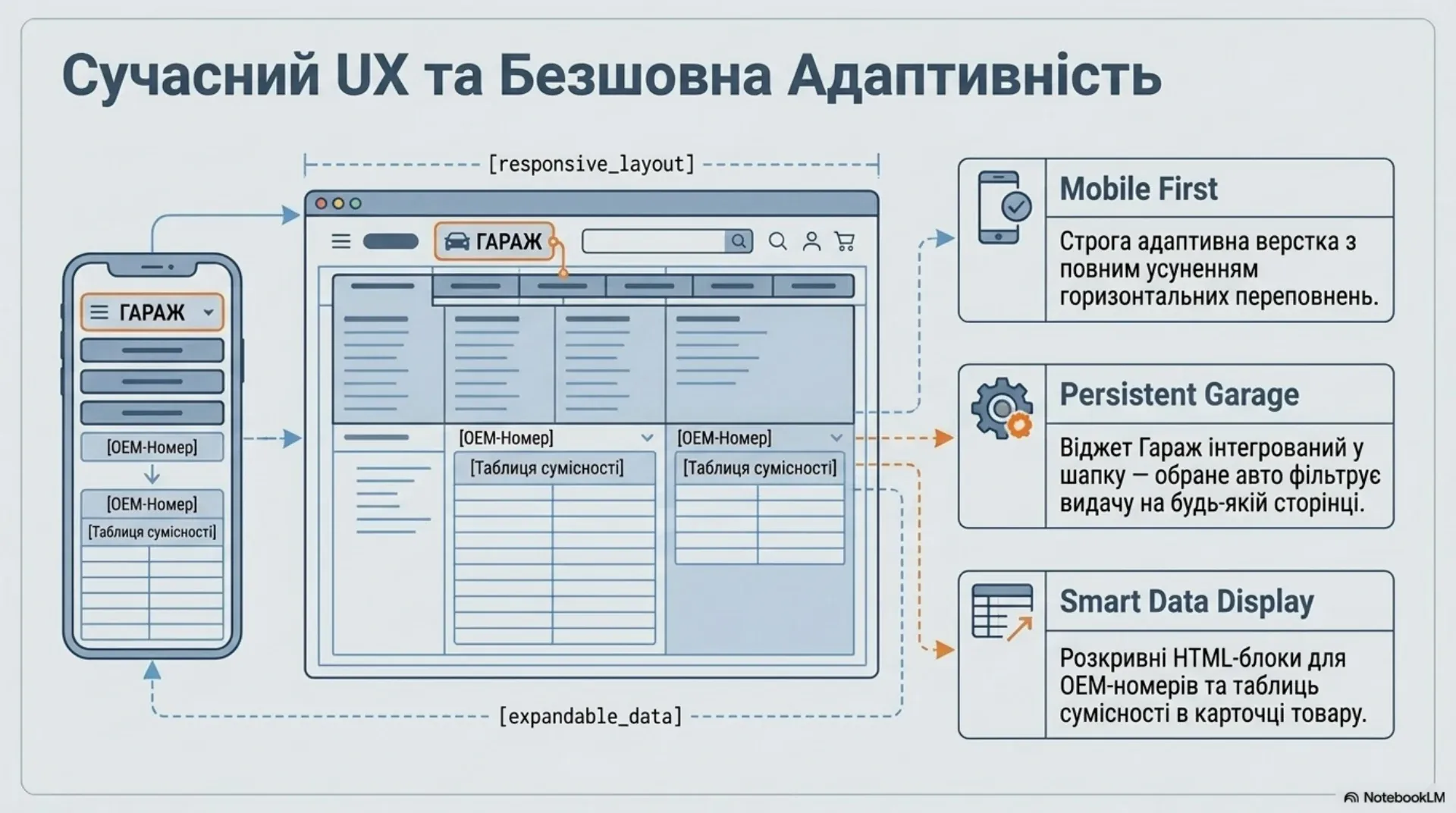
Several search channels — by vehicle, by article and cross-number, by catalog — all lead to the same precise result. A personal “Garage” remembers the user’s car so repeat purchases take seconds.



TecDoc import engine
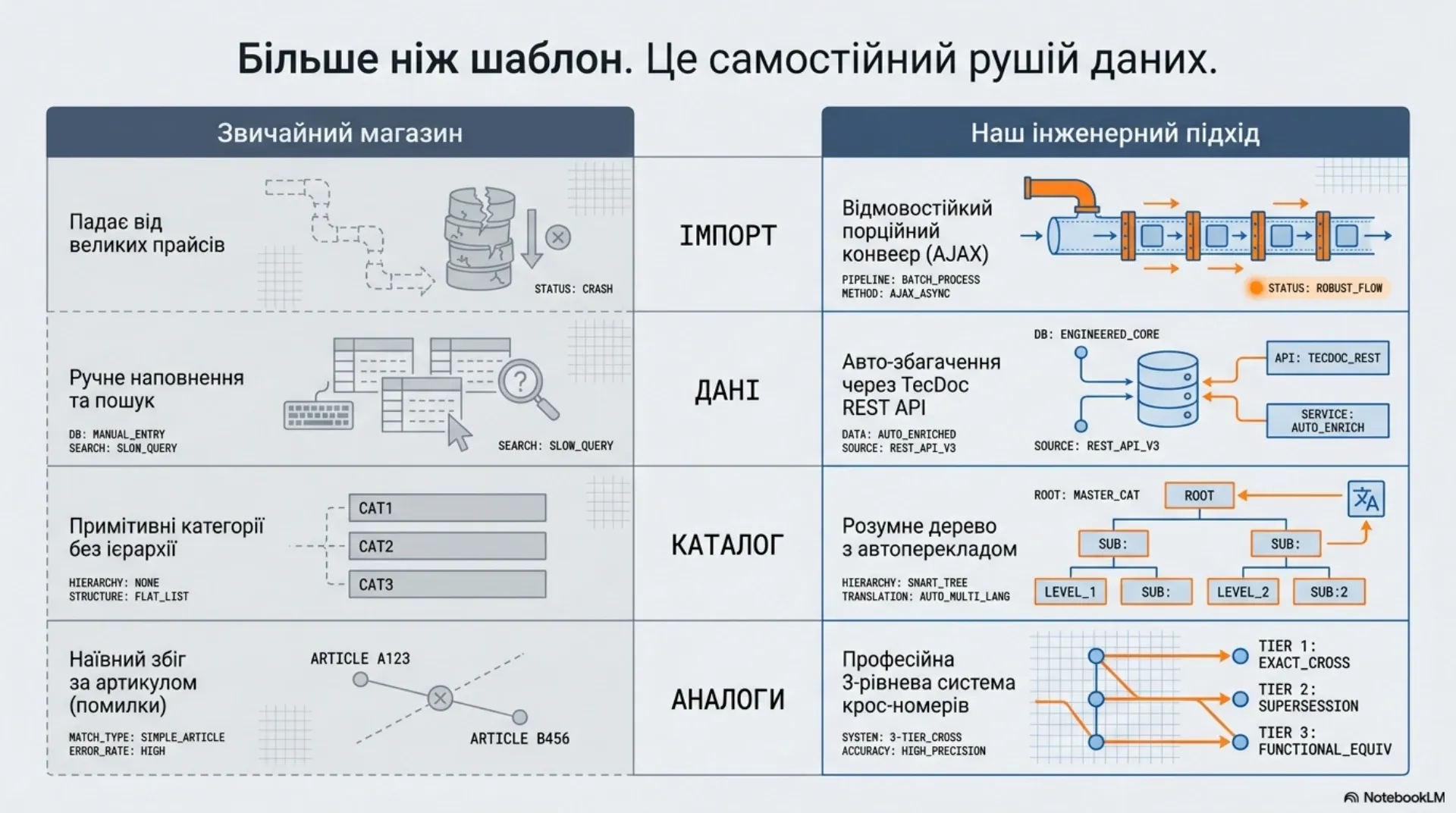
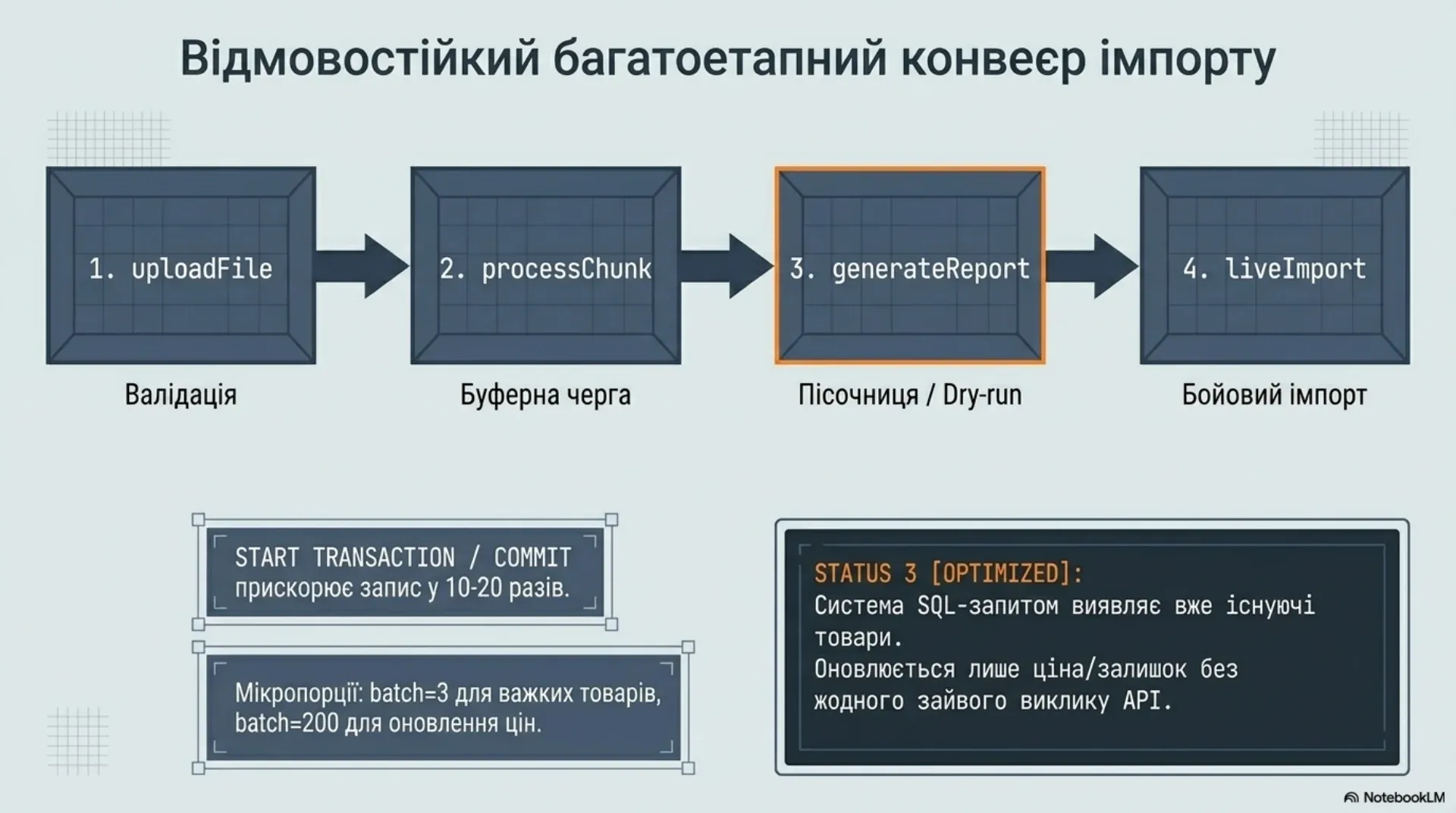
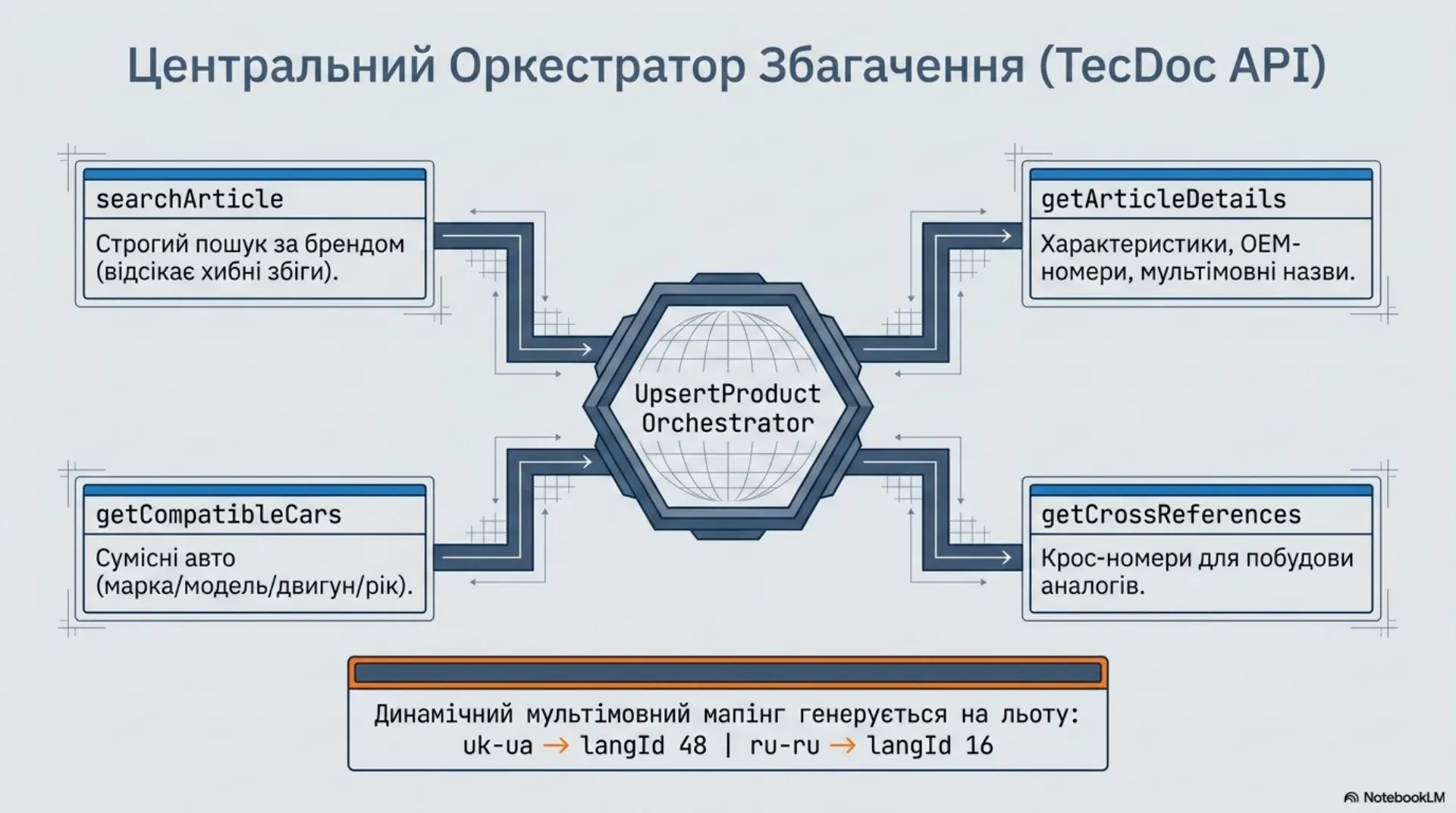
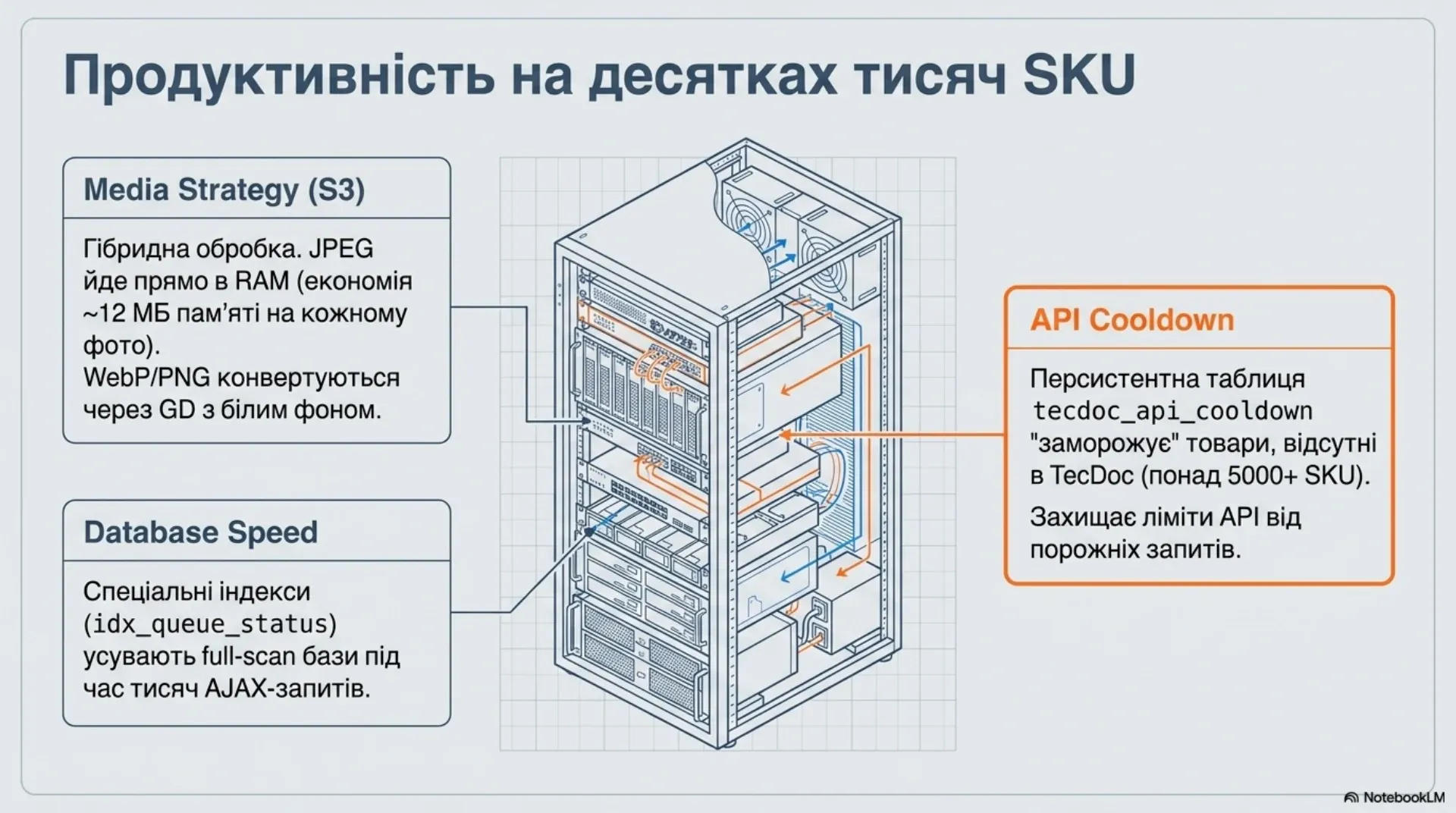
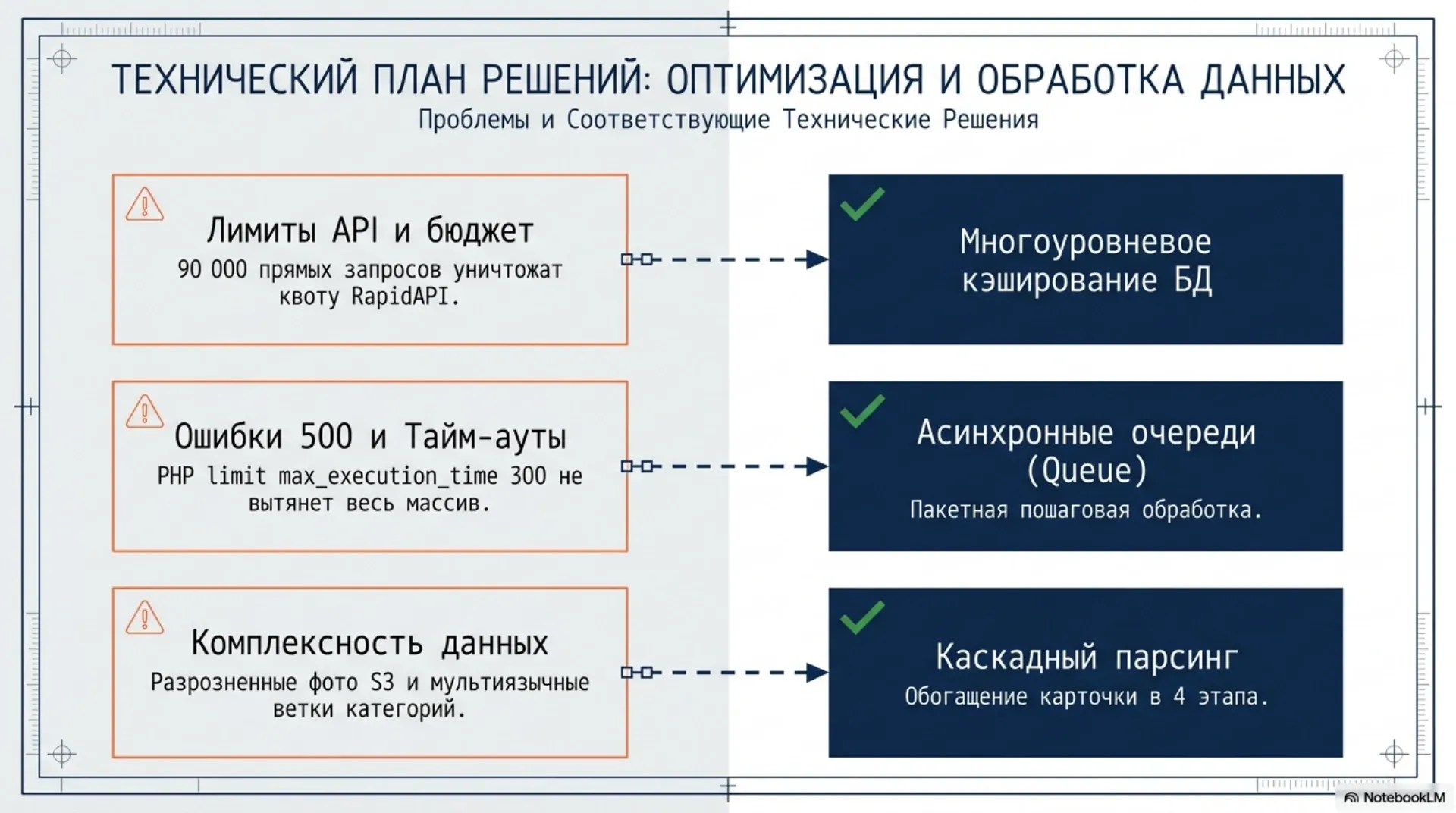
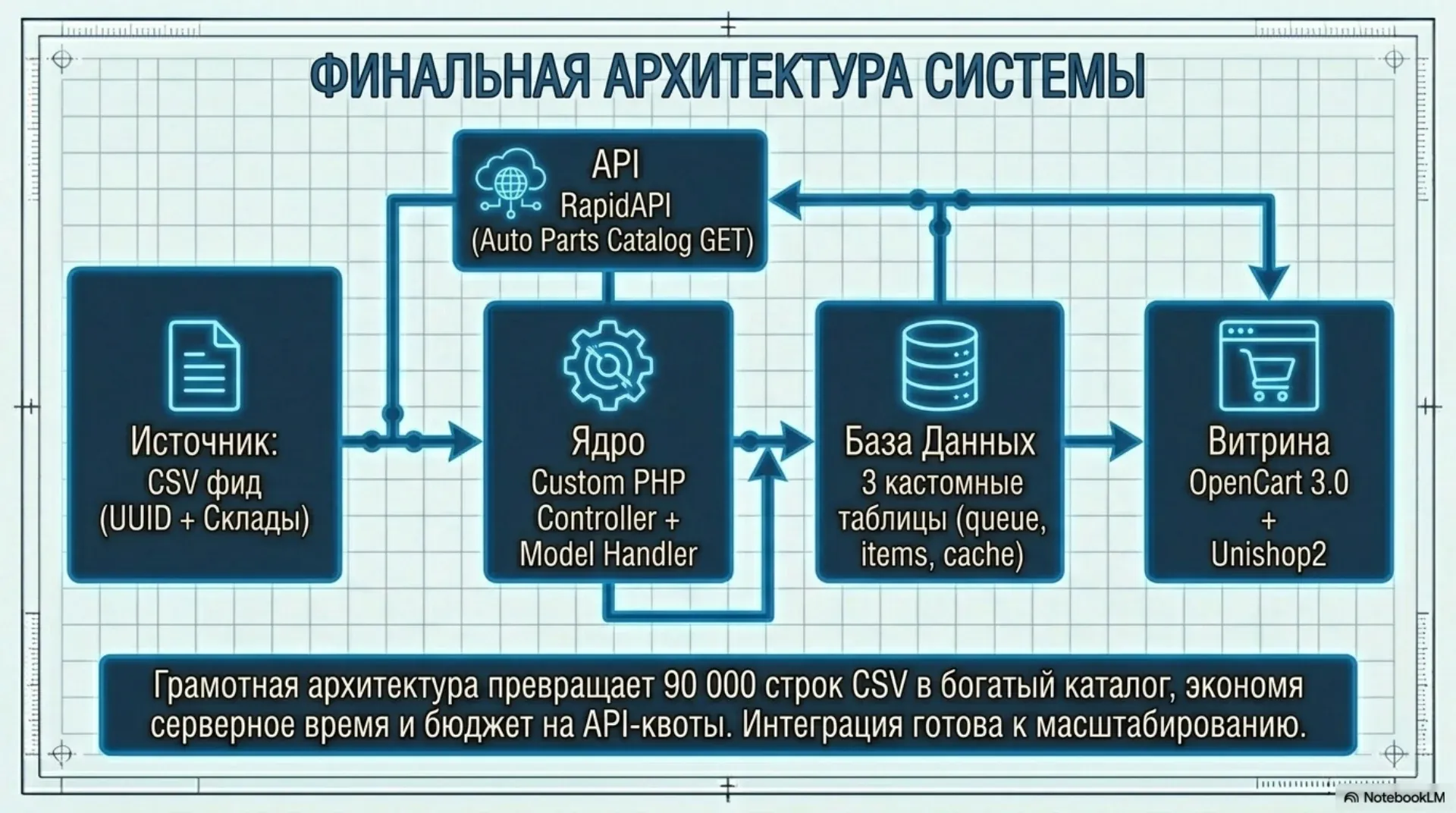
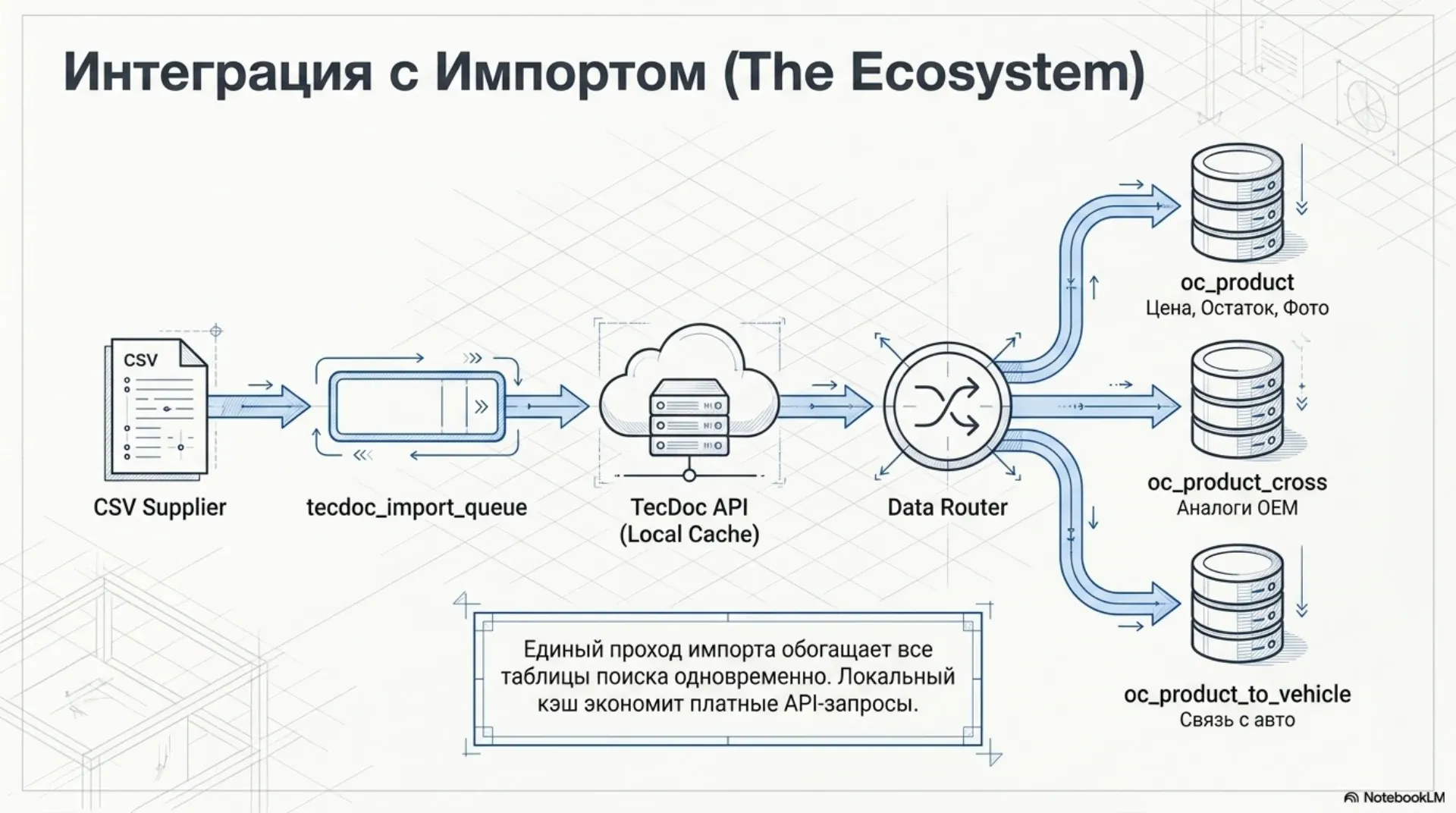
The platform is built around an autonomous import pipeline. The supplier’s CSV feed (UUID + warehouse stock) lands in a buffer queue table, from which a PHP controller calls TecDoc via RapidAPI in batches. To avoid hitting paid-API limits we added multi-level caching (keyed by the request MD5), and moved heavy operations into asynchronous status-driven queues so no timeout can ever stall the site.
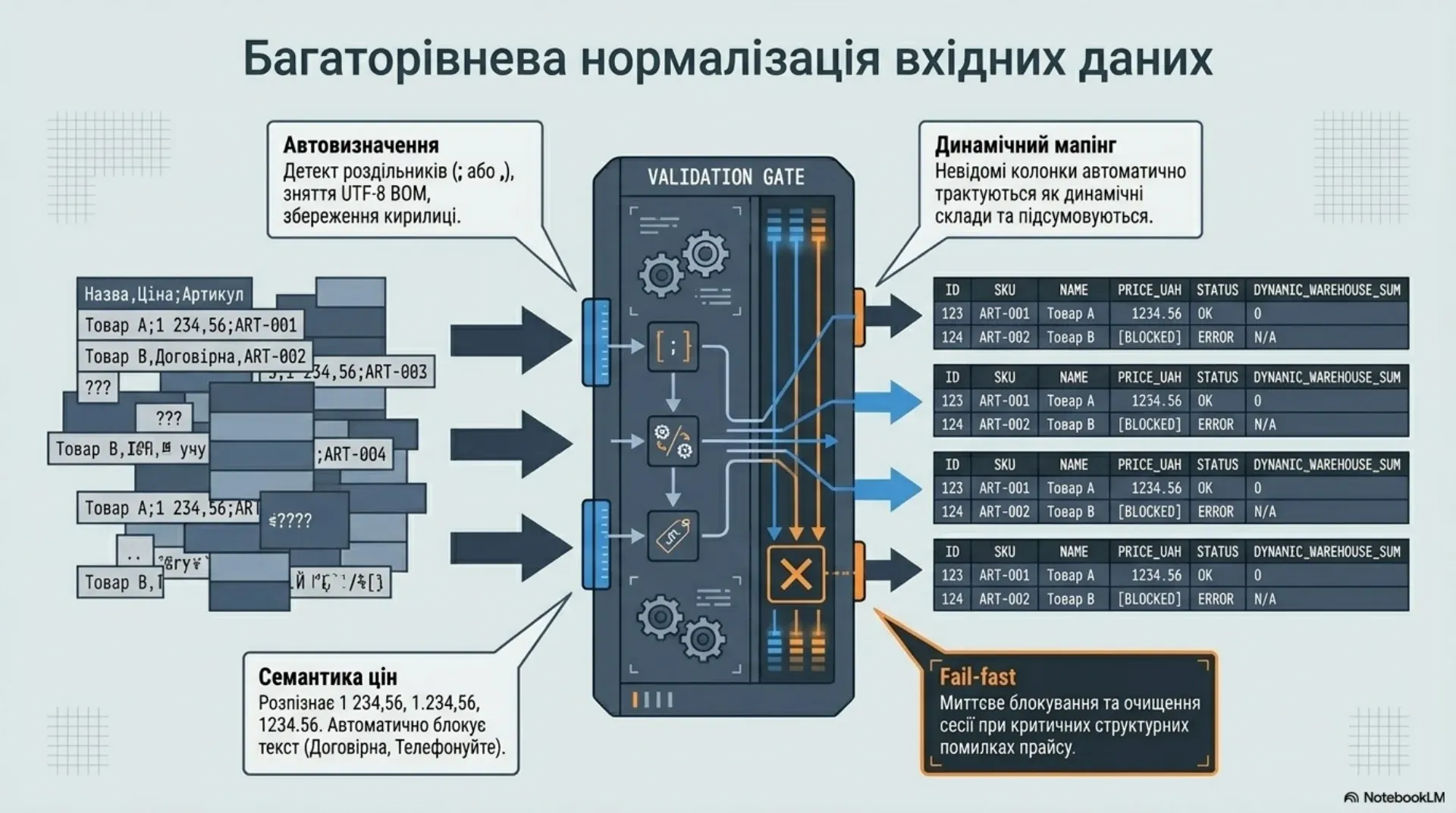
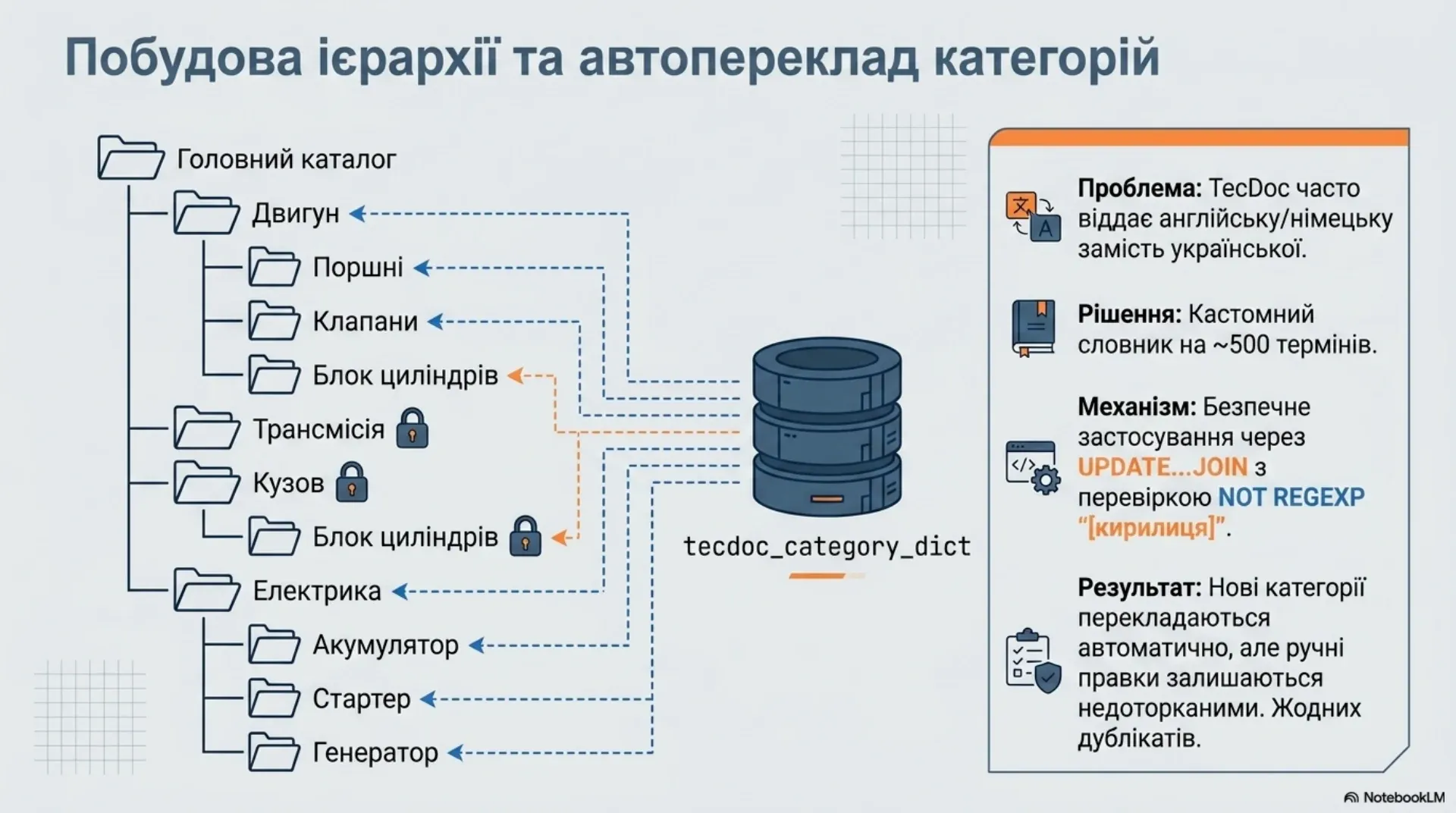
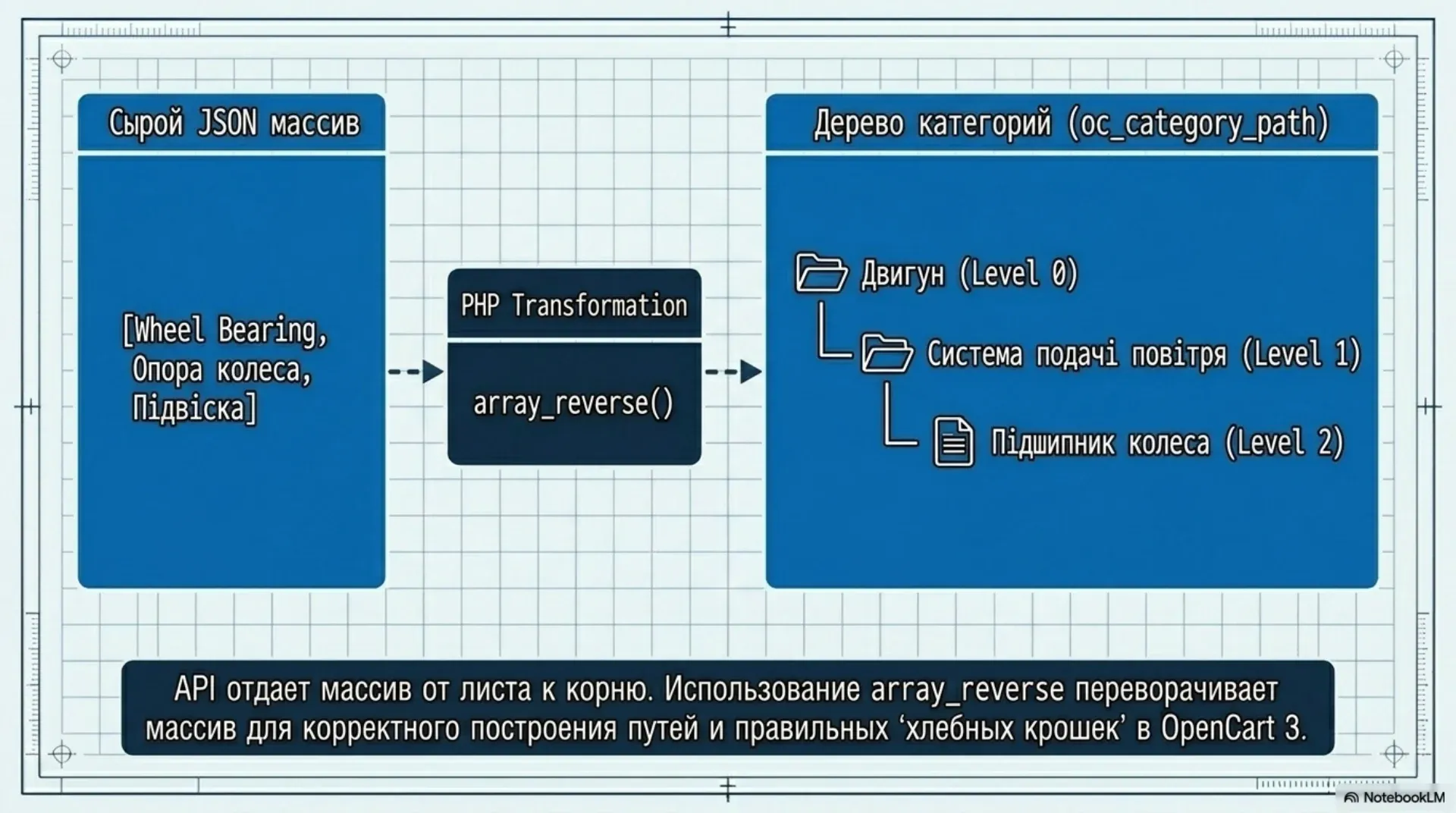
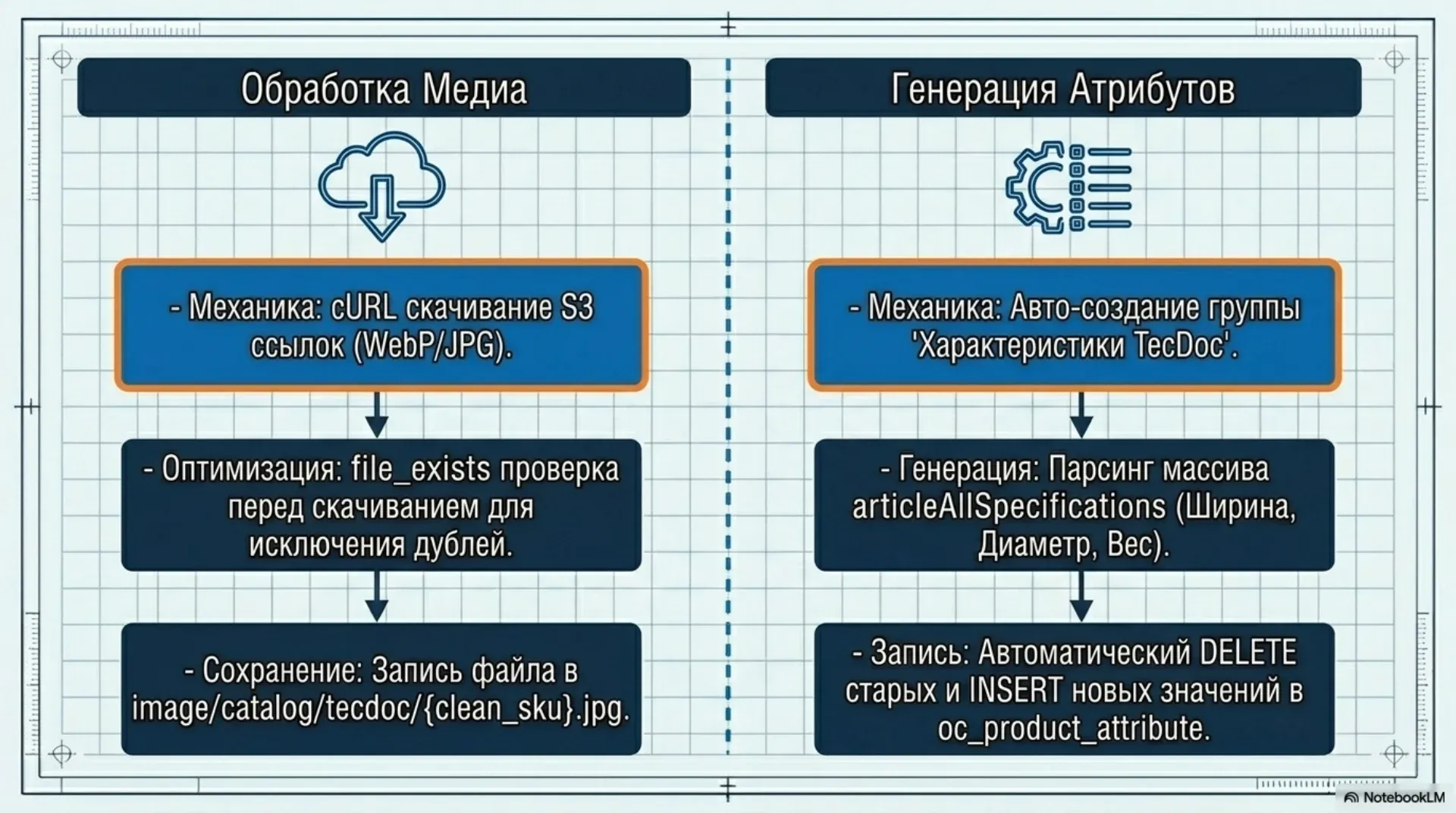
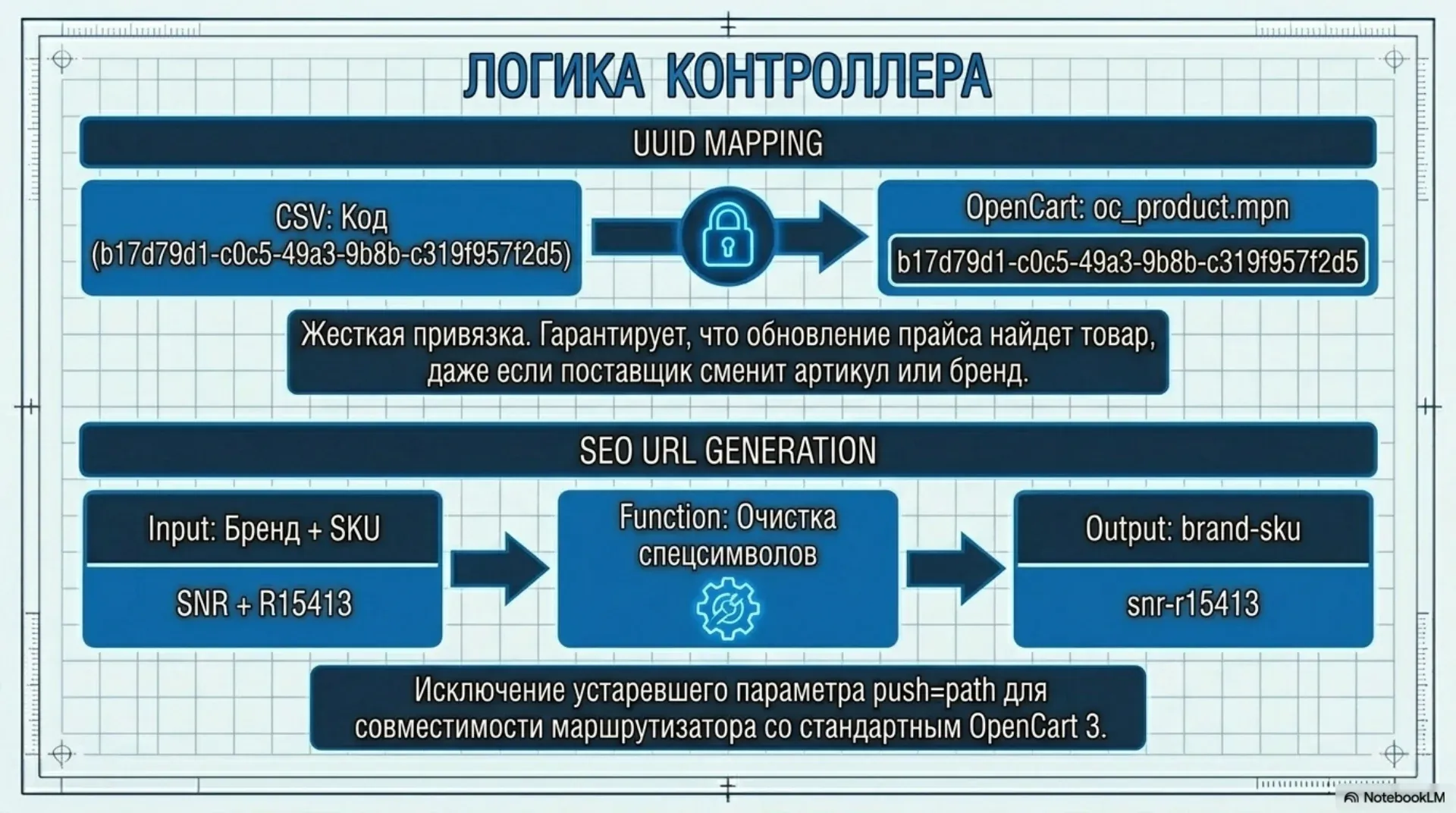
We don’t just load data — we normalize it: summing stock across warehouses and unifying brand names, a four-step request cascade for reference specifications, auto-assembly of the attribute group, correct category ordering for breadcrumbs, and a strict UUID → product SKU mapping.
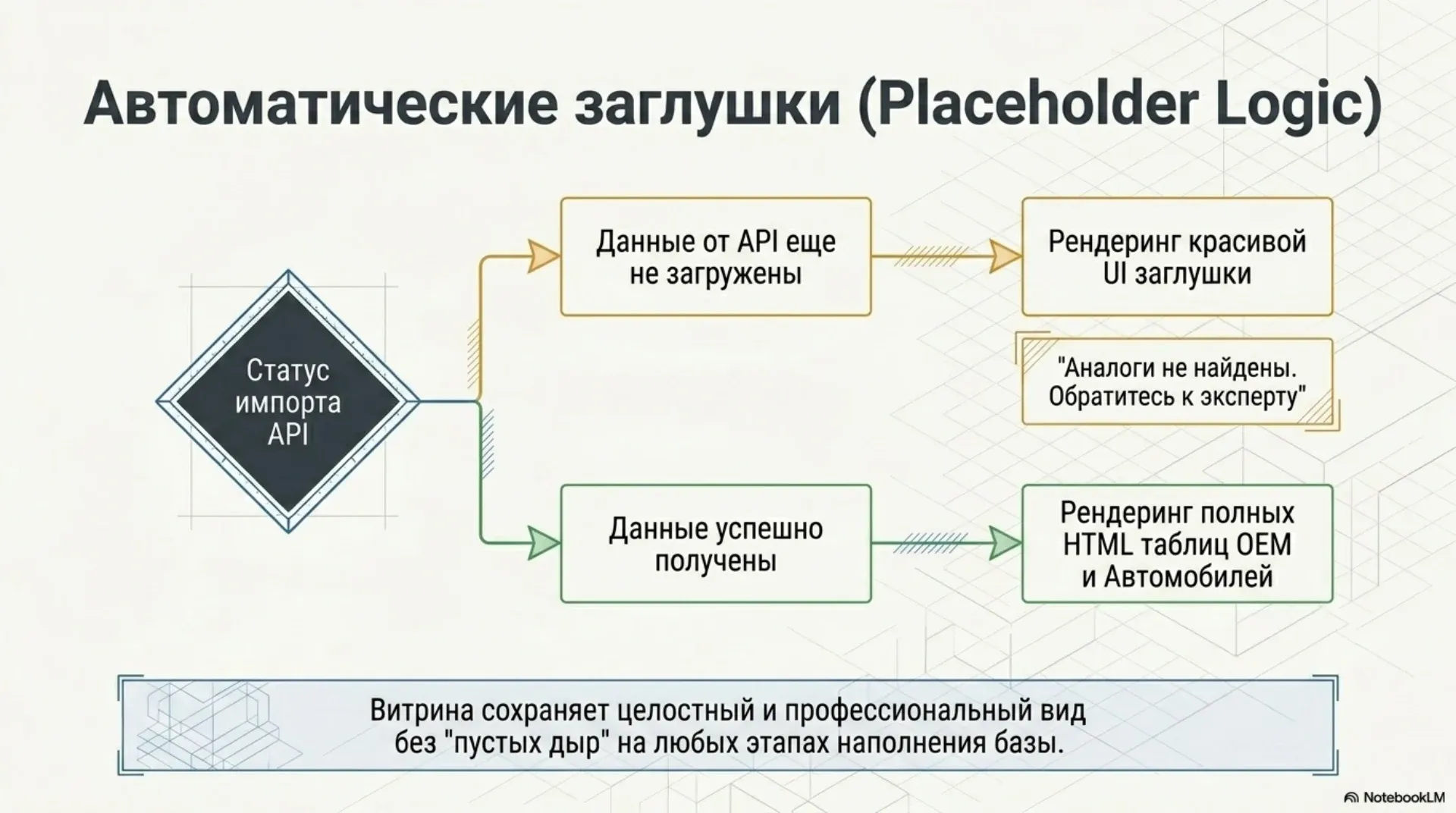
If the API returns nothing, a “soft landing” kicks in: the product is still created in a service category, so the import never fails. Live AJAX import and background CRON automation keep the catalog up to date around the clock.

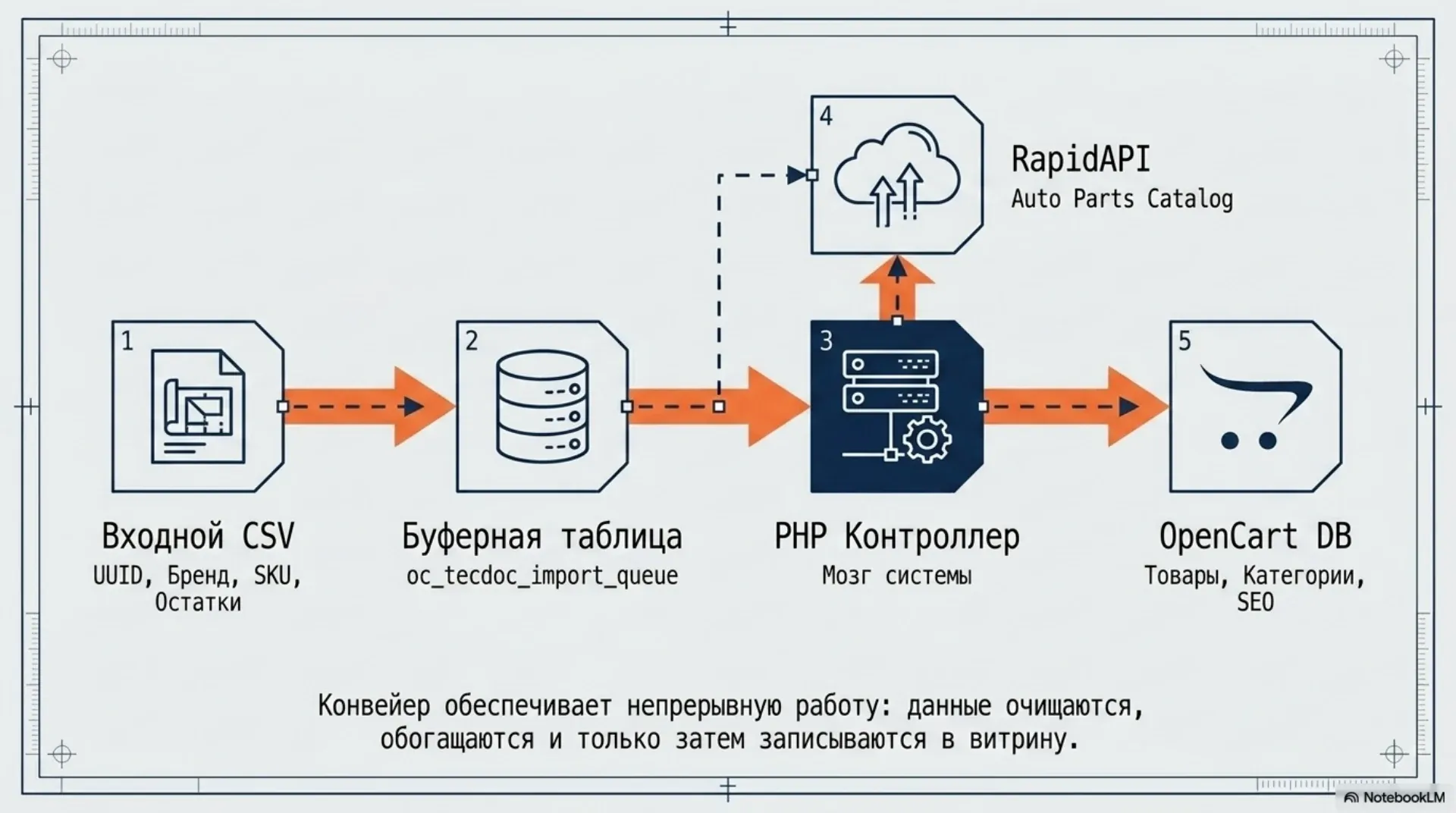
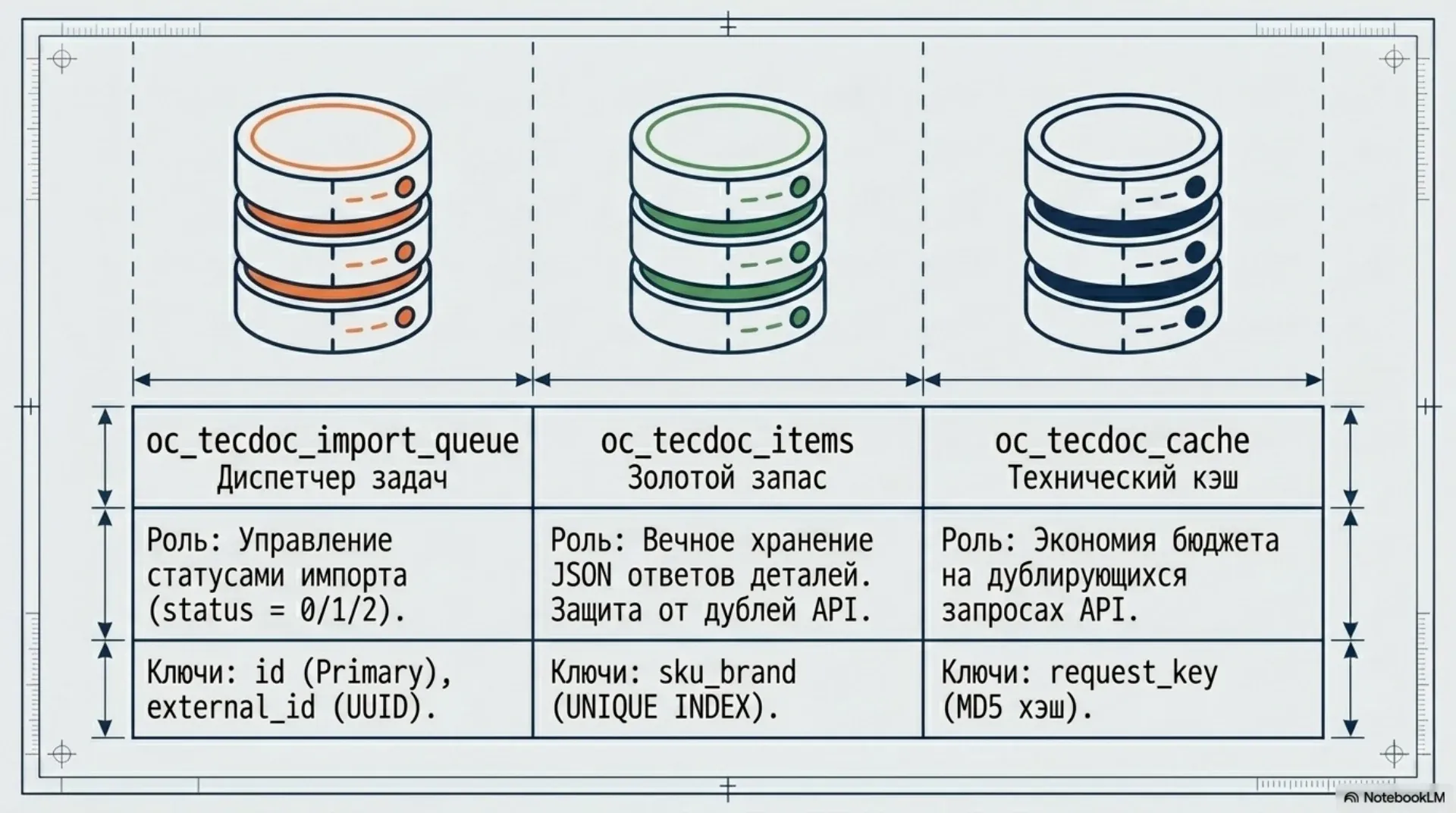

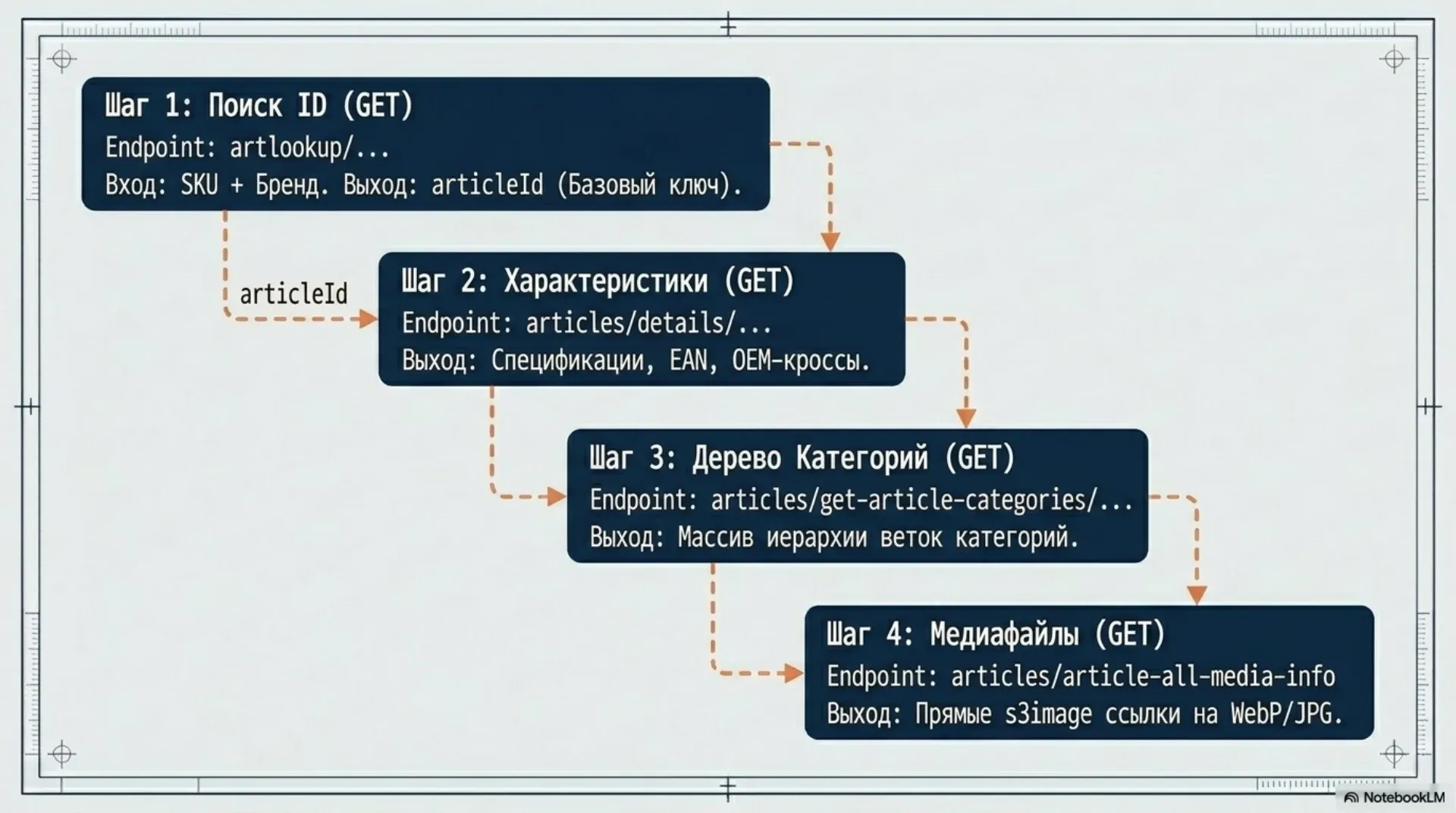
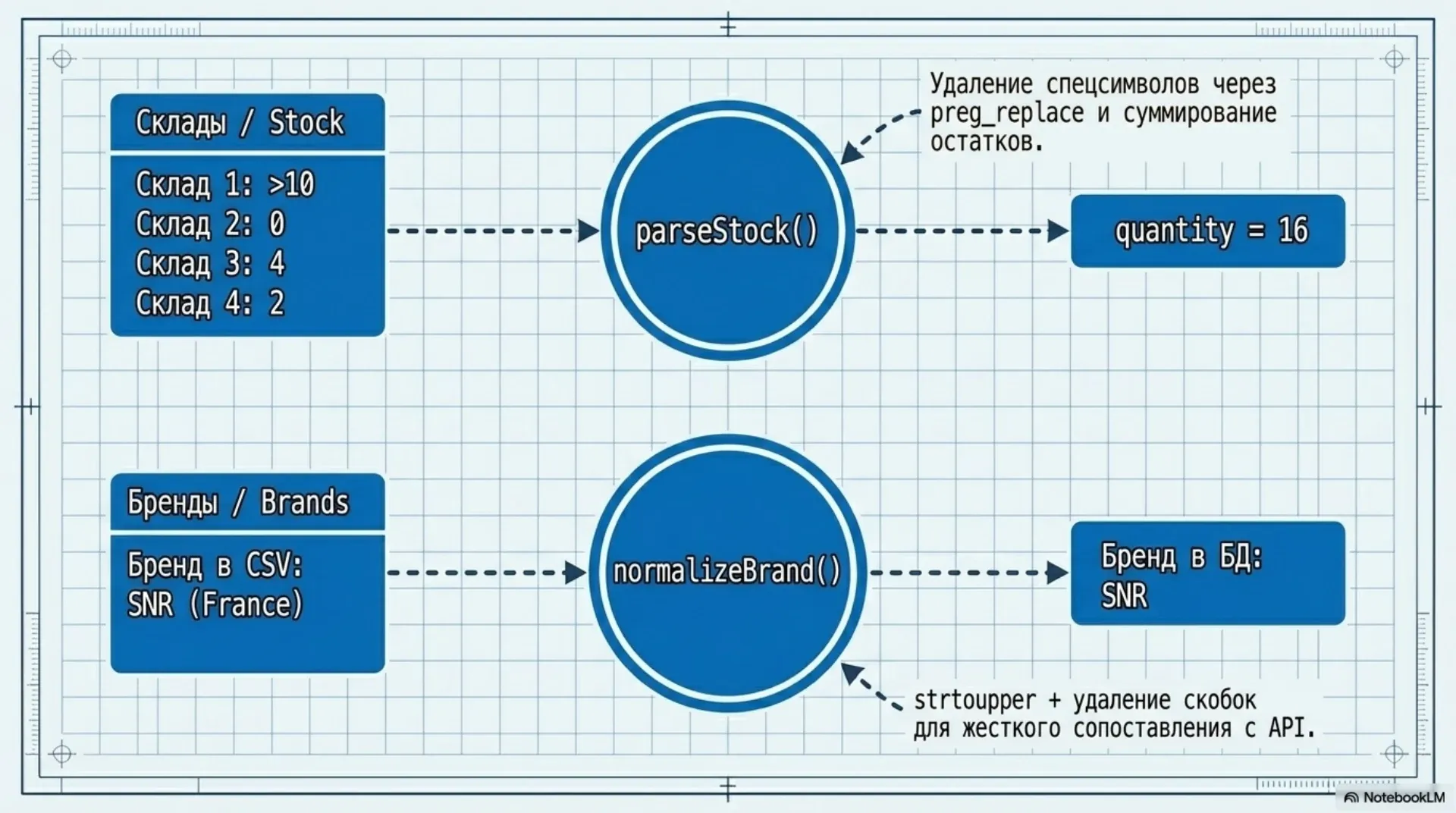


Precision search & analogs
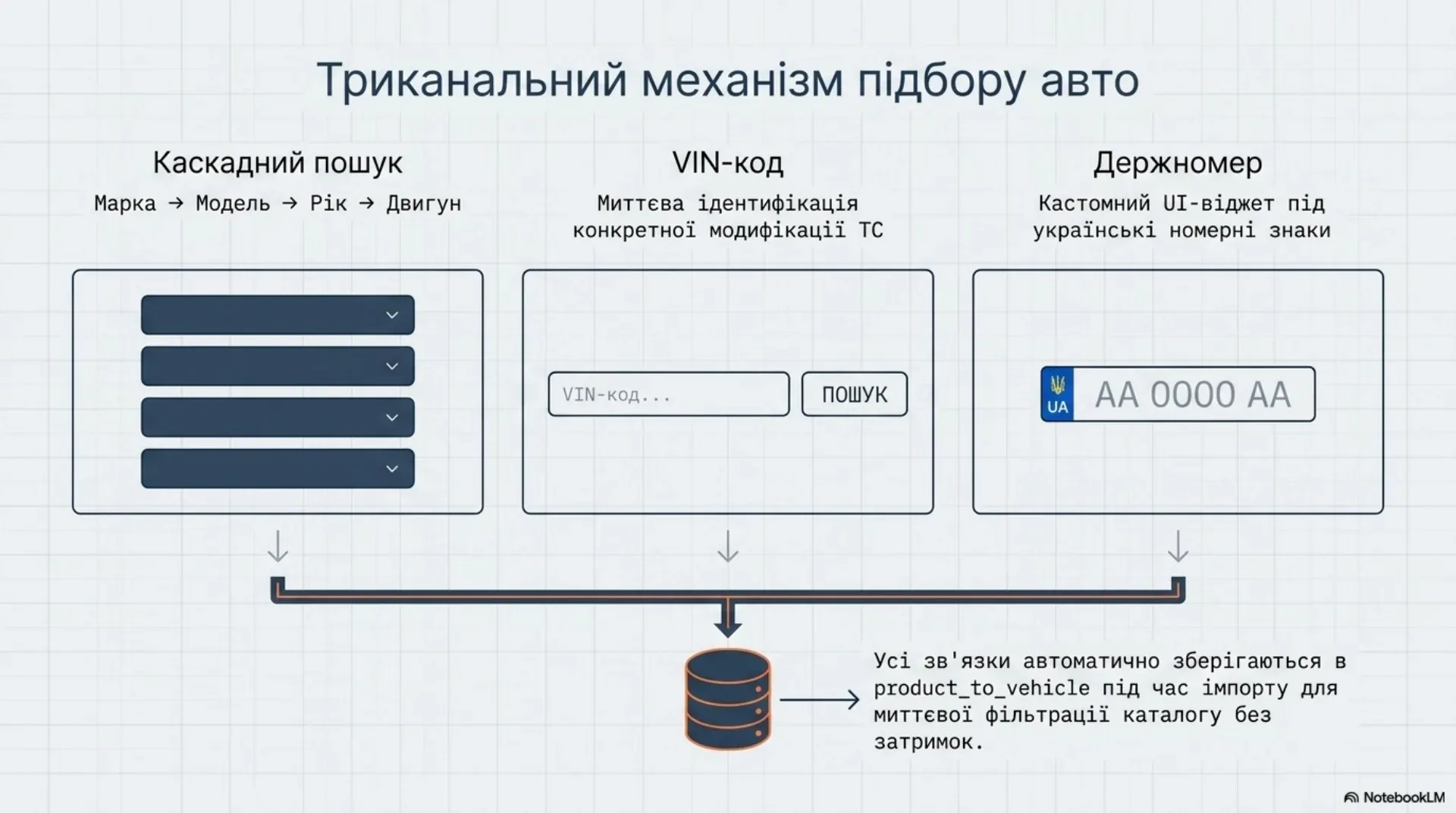
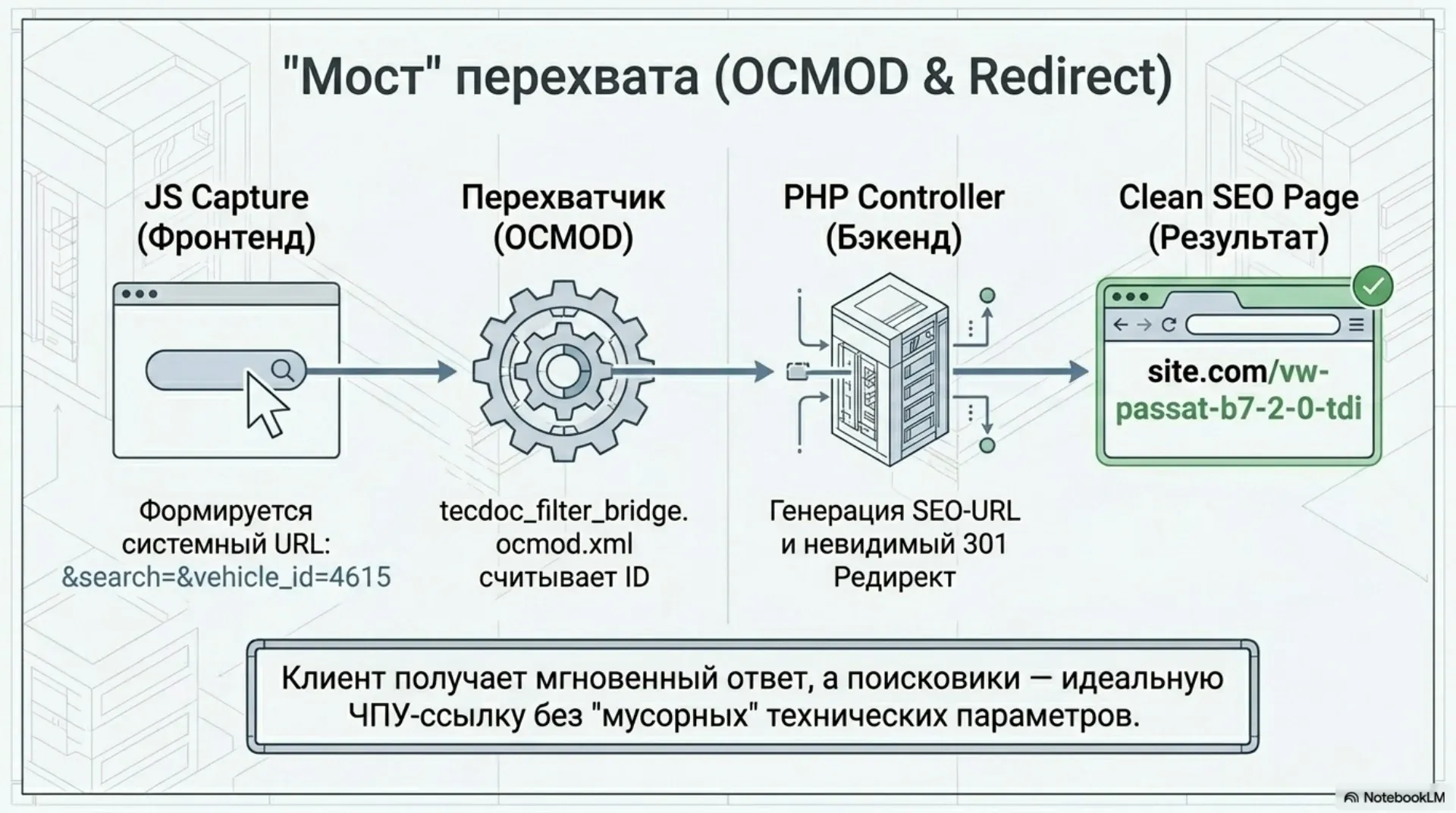
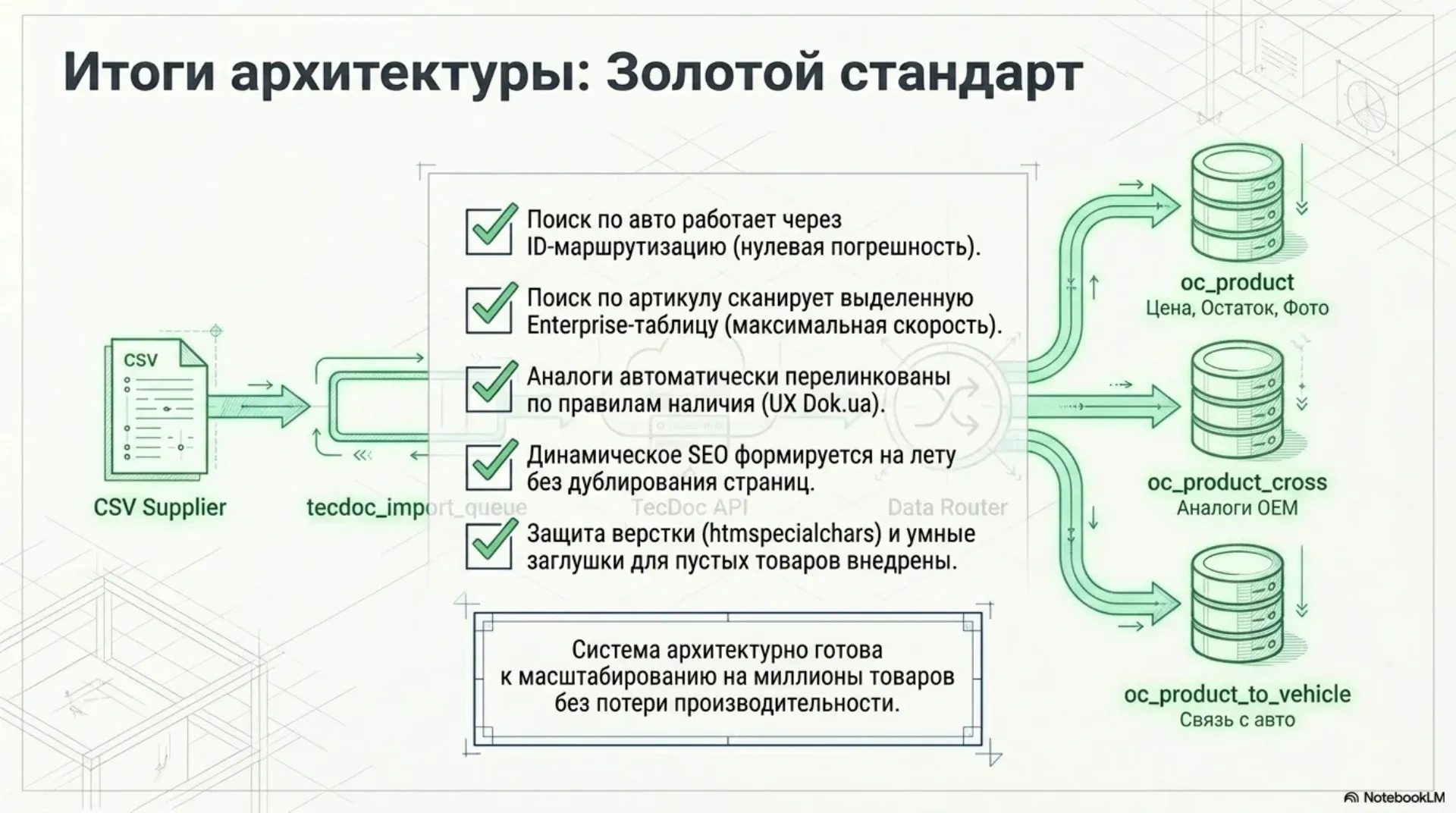
We moved search from fragile text matching to identifier-based routing. A front-end funnel “Make → Model → Year → Engine” collects an array of vehicle_ids and, through an OCMOD bridge, returns an instant result to the user and a clean SEO URL to search engines via an invisible 301 redirect.
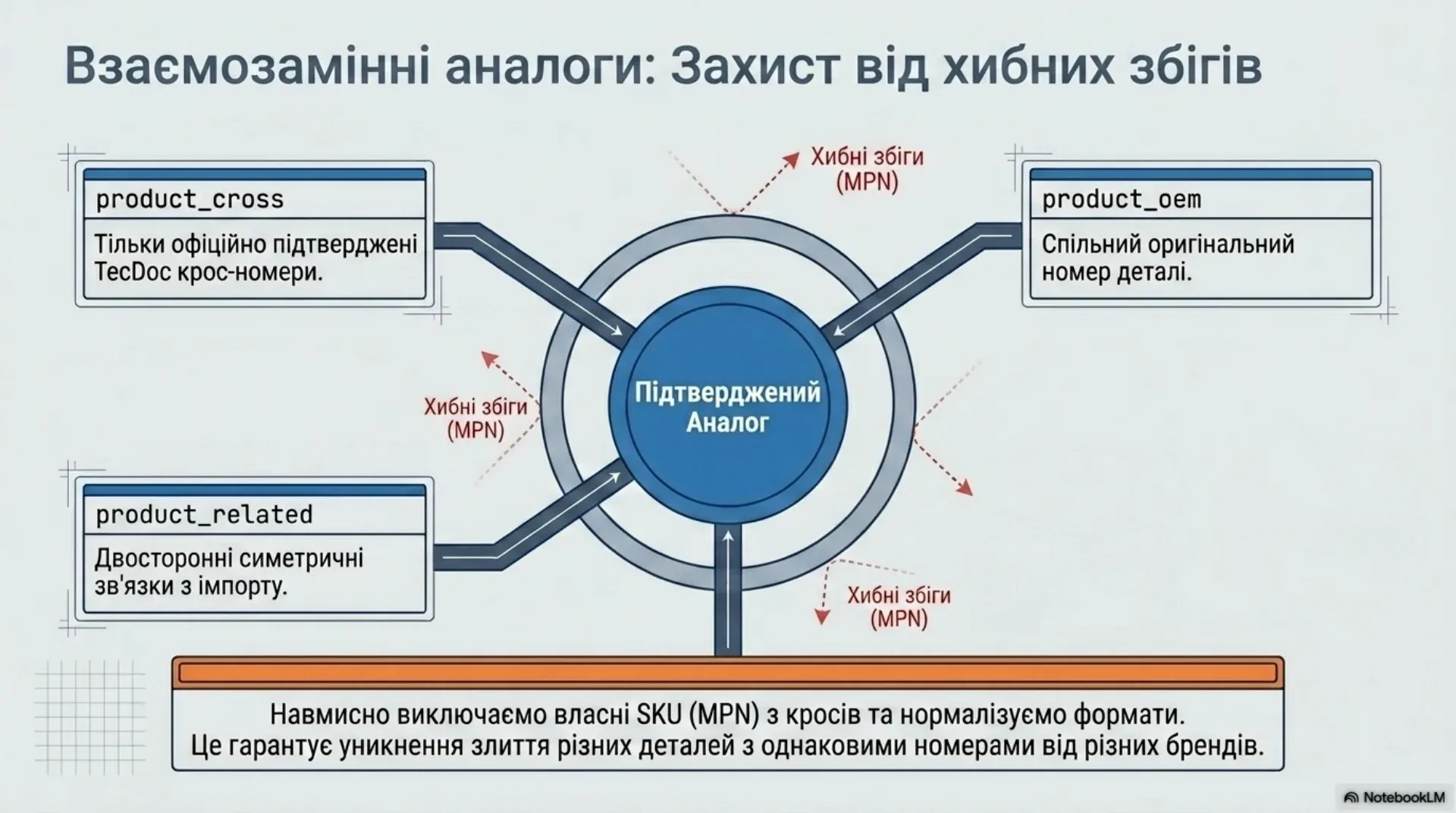
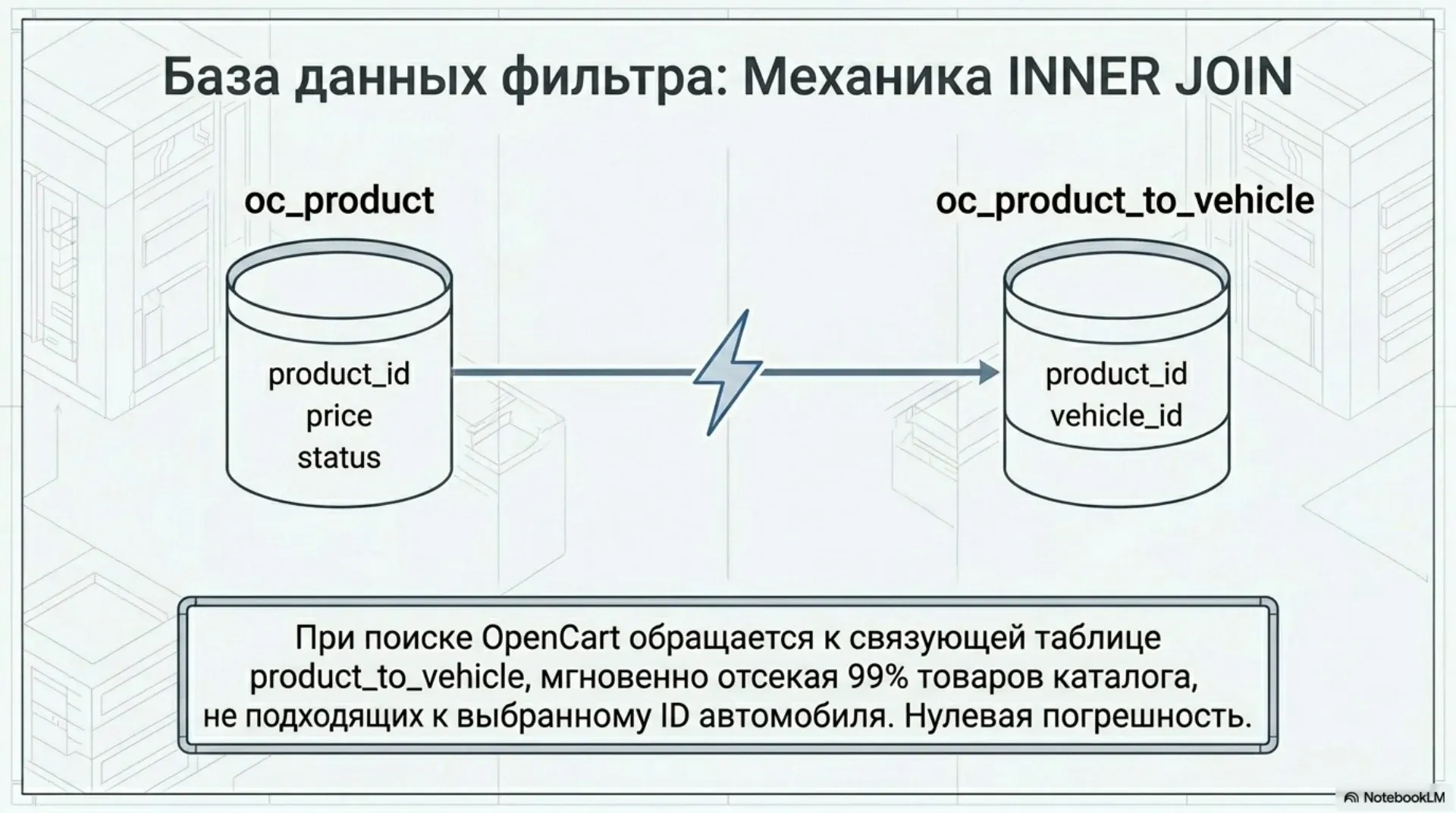
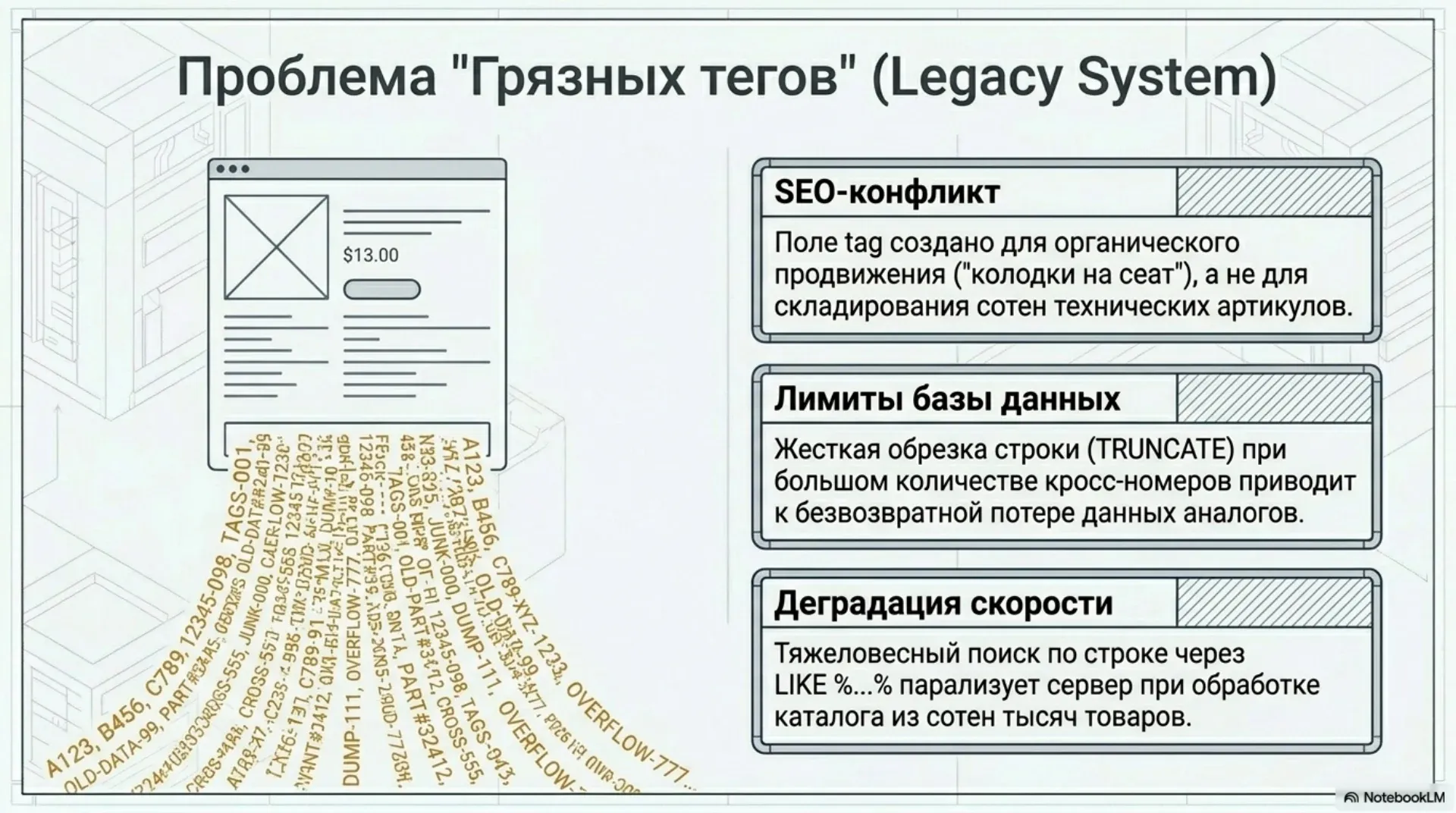
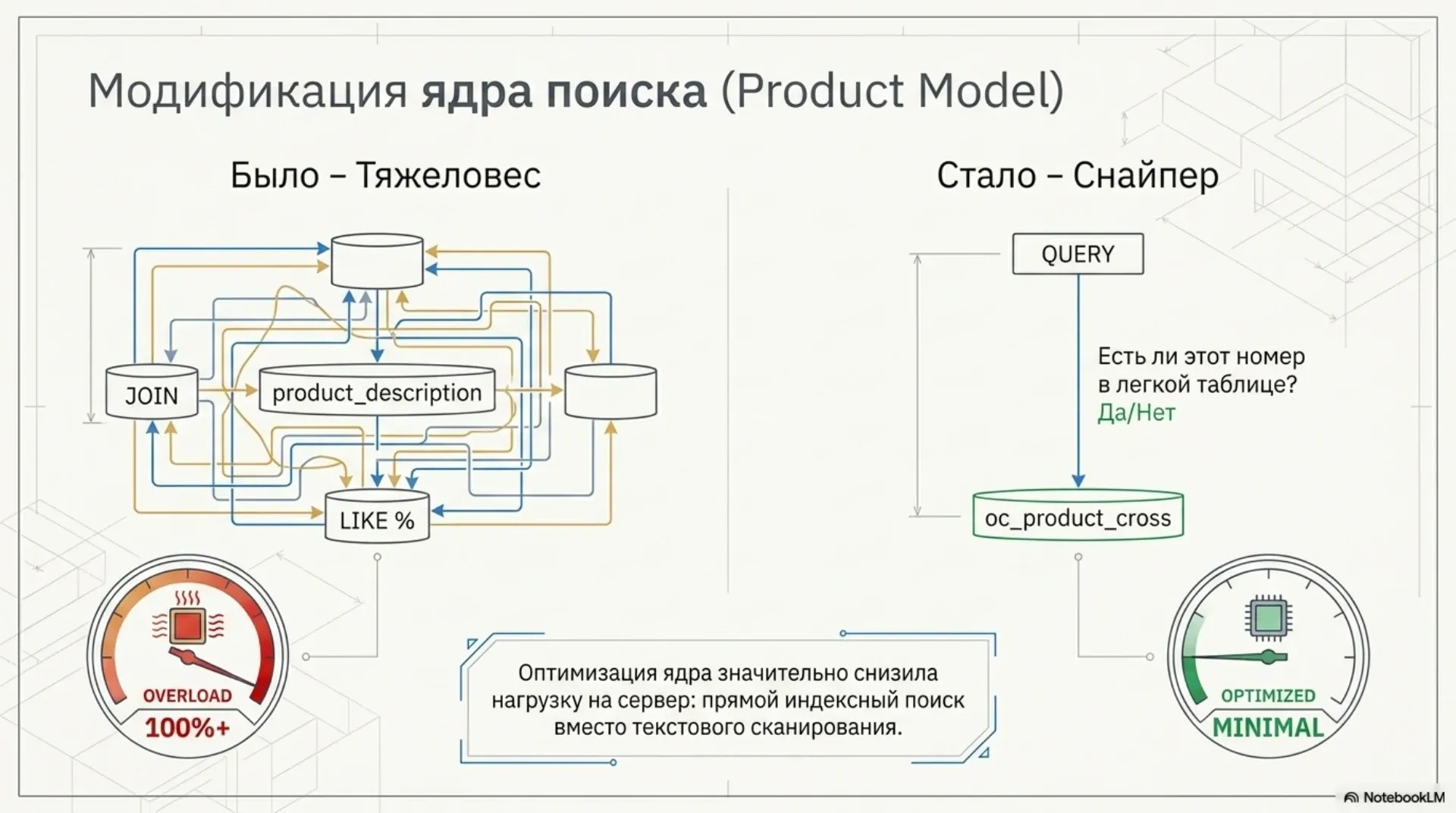
In the database, selection relies on the oc_product_to_vehicle link — an INNER JOIN instantly cuts out 99% of irrelevant products — and a dedicated indexed cross-number table oc_product_cross instead of slow LIKE scanning.
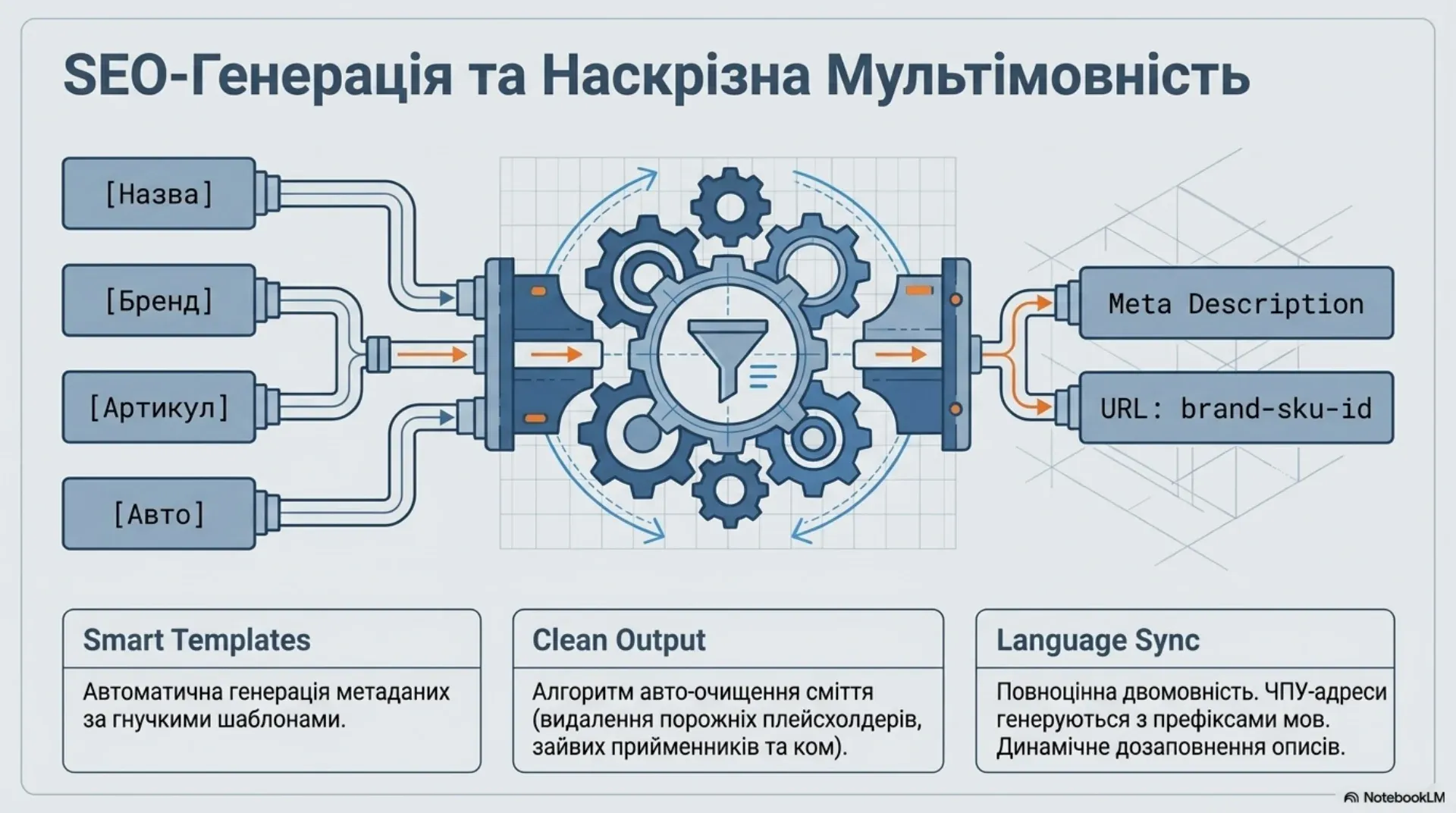
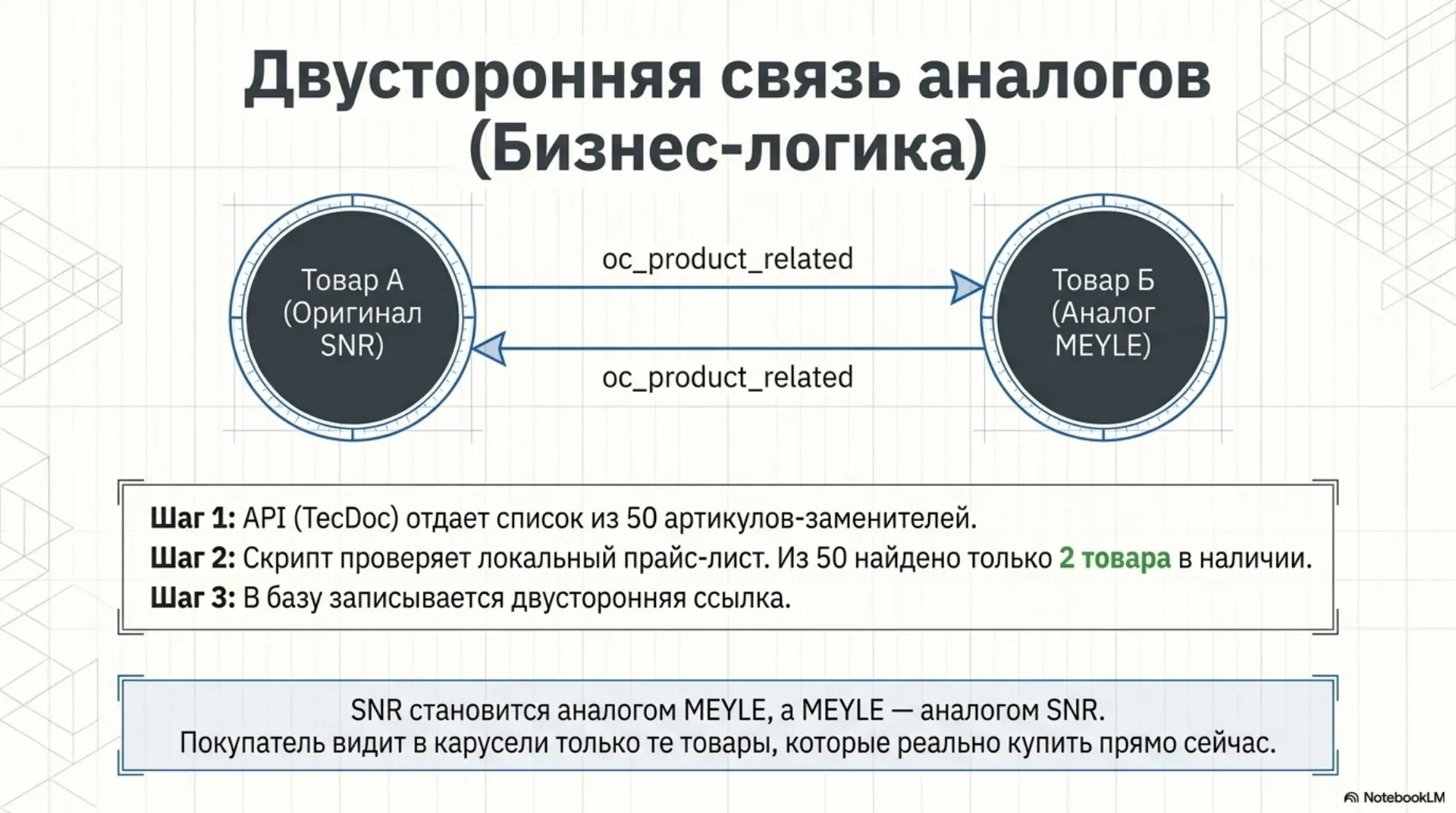
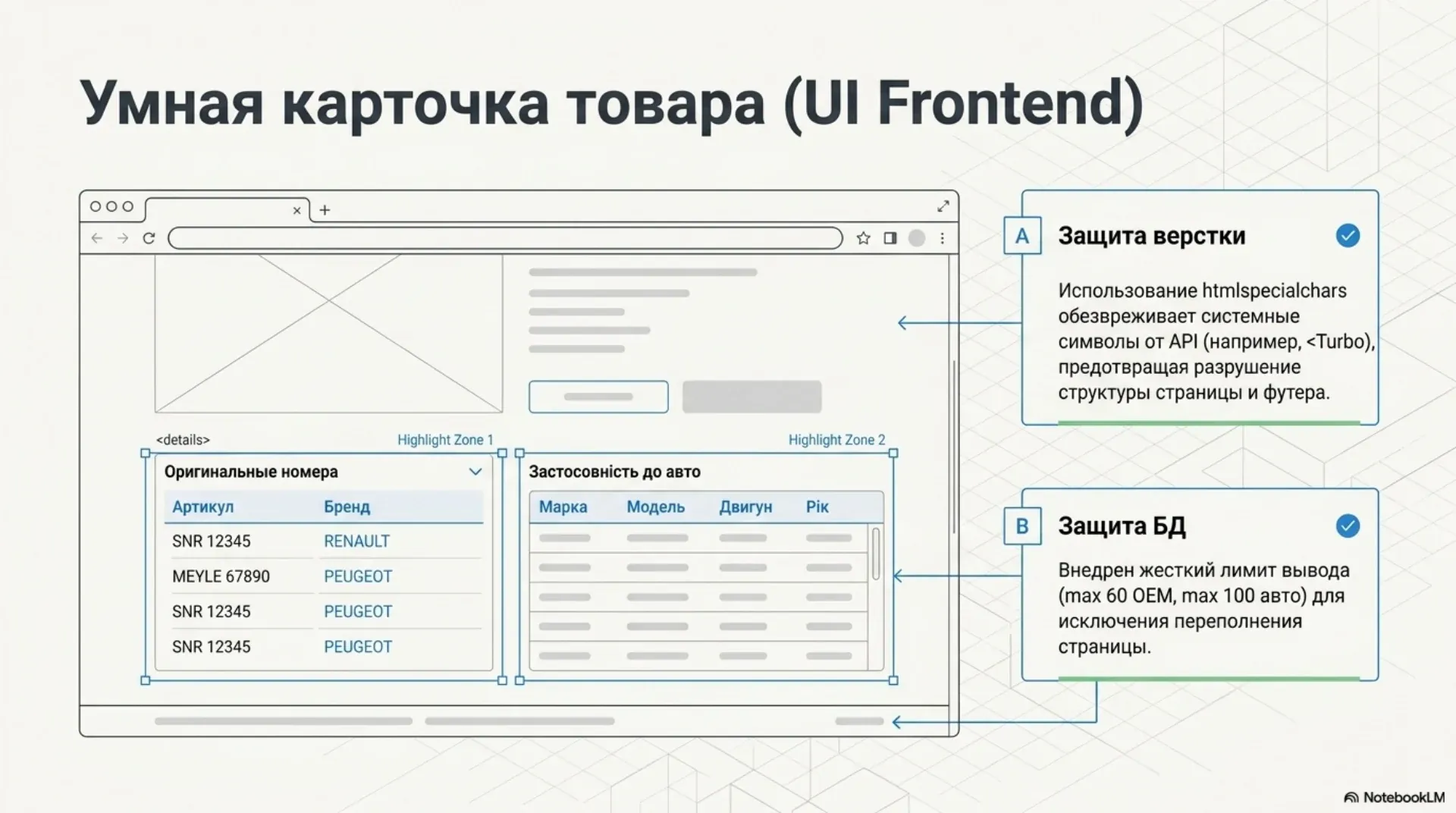
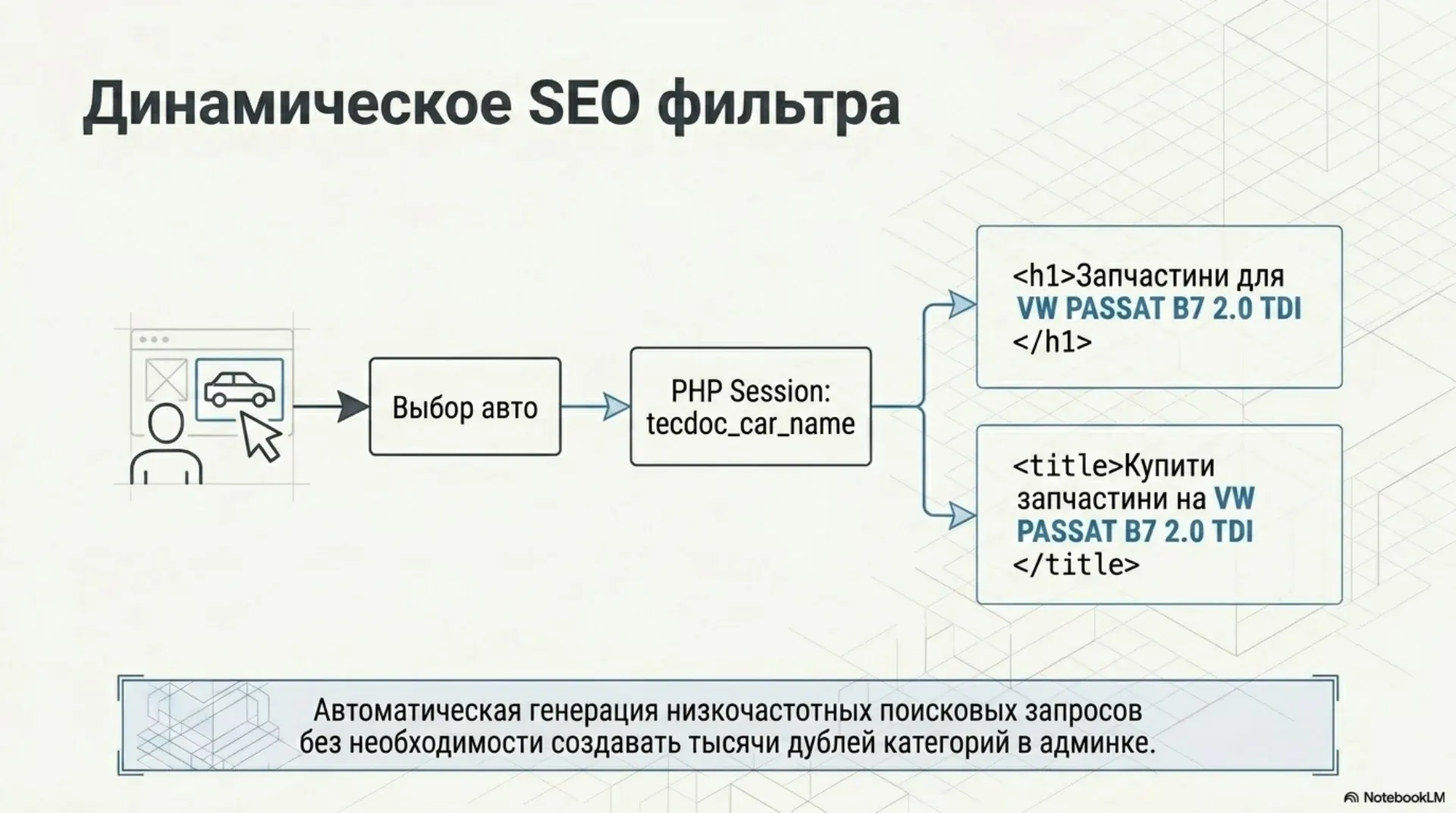
The analog system is bidirectional: out of 50 TecDoc substitutes, only those actually in stock reach the listing. Add dynamic SEO (H1 and Title generated on the fly for the chosen vehicle, with no thousands of duplicate categories), markup protection via htmlspecialchars, and “smart placeholders” that keep the storefront coherent even while data is still loading.


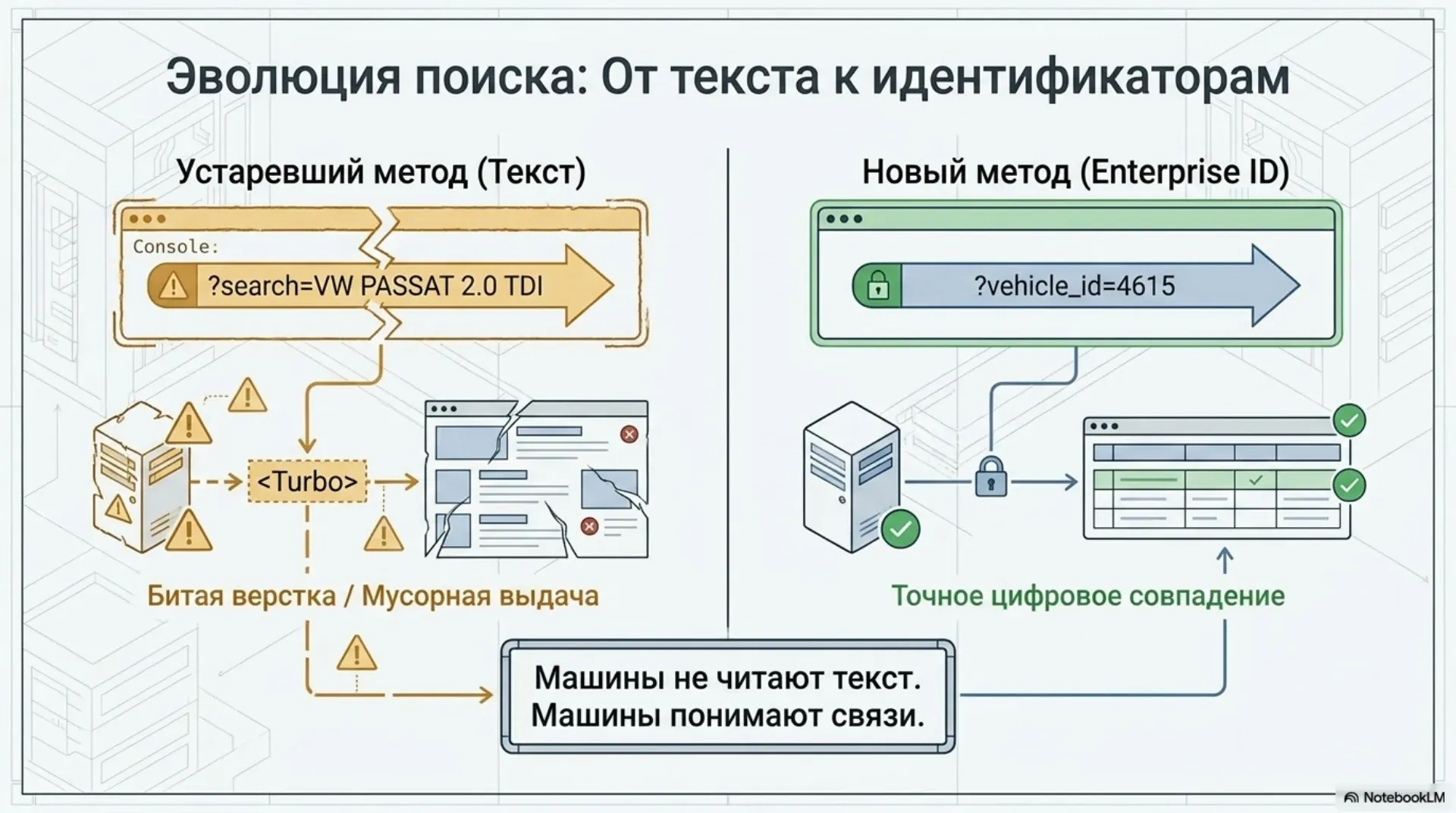


“Machines don’t read text — machines understand relationships.”
— Search architecture principle